History of the Flight
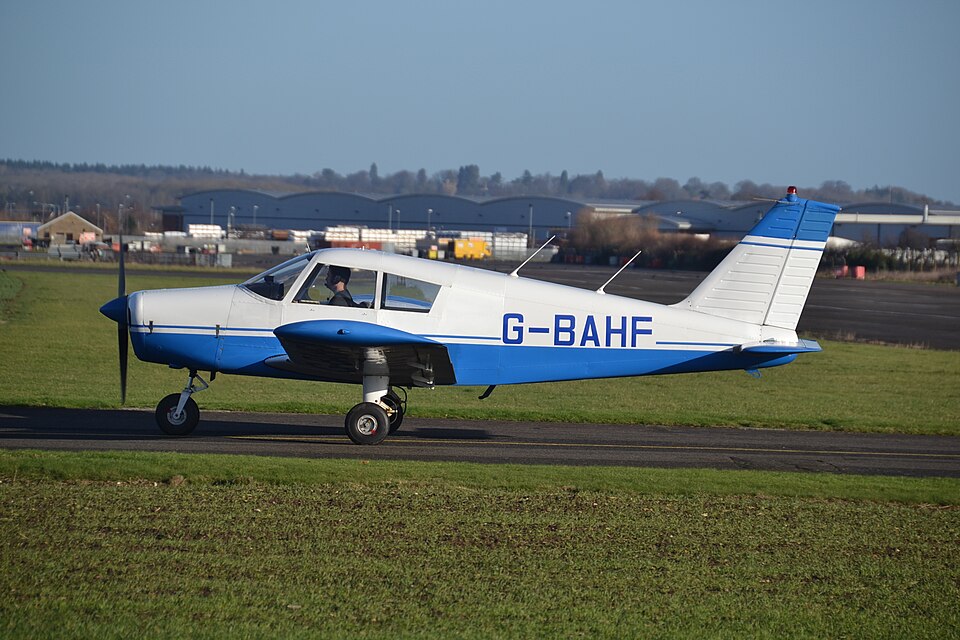
The commander, a 49-year-old commercial pilot with 780 hours total (127 on type), briefed a student and a passenger for a trial lesson. He had earlier pulled the aircraft, a 1971 Piper PA-28-140 (registration G-BAHF), out of the hangar. As he assisted the two occupants into the aircraft, he noticed that the windscreen was rapidly fogging. He advised them that he would keep the door open after starting the engine to help demist the windscreen.
Incident Sequence
During engine start, the commander held his feet on the rudder pedals, covering the brakes. After the engine was running, he turned to latch the door. At that moment, he noticed the aircraft was moving. He re-applied pressure to the rudder pedals but then realized this aircraft was not fitted with toe brakes. He reached for the brake handle with his left hand but could not locate it; the student’s right leg was blocking access to the handle because the student kept his feet away from the rudder pedals as briefed. In the short time available, the commander stopped the engine by moving the mixture control to the idle cut-off position, but could not prevent a low-speed collision with an adjacent Piper Seneca.
Damage
G-BAHF sustained minor damage to its outer wings. The adjacent Piper Seneca suffered damage to its left hand flaps, door, and tail cone.
Cause
The pilot summarized the cause as a combination of the parking brake not being set, his inability to locate the parking brake handle quickly due to it being obstructed by the student’s leg, and the restricted forward vision due to the misted windscreen.