No fatalities

Piper PA-28-180 Runway Excursion at Liverpool Airport (G-LFSG)

Liverpool Airport, GB

On March 3, 2001, a PIPER PA-28-180 (registration G-LFSG) operated by North East Aviation was involved in an aviation accident near Liverpool Airport, GB. No fatalities were reported. Investigators recorded the probable cause as: The wheelbarrowing effect, due to the pilot not allowing the nose landing gear to lift off, combined with left rudder application to counter the crosswind, resulting in the nose wheel pointing left and the aircraft leaving the runway. This summary draws on records from the UK Air Accidents Investigation Branch (AAIB); 4 related events involving the same aircraft type or operator are linked below.

Sourcesthe UK Air Accidents Investigation Branch (AAIB)Primary reportUpdated 2026-10-18Data APIEditorial standards
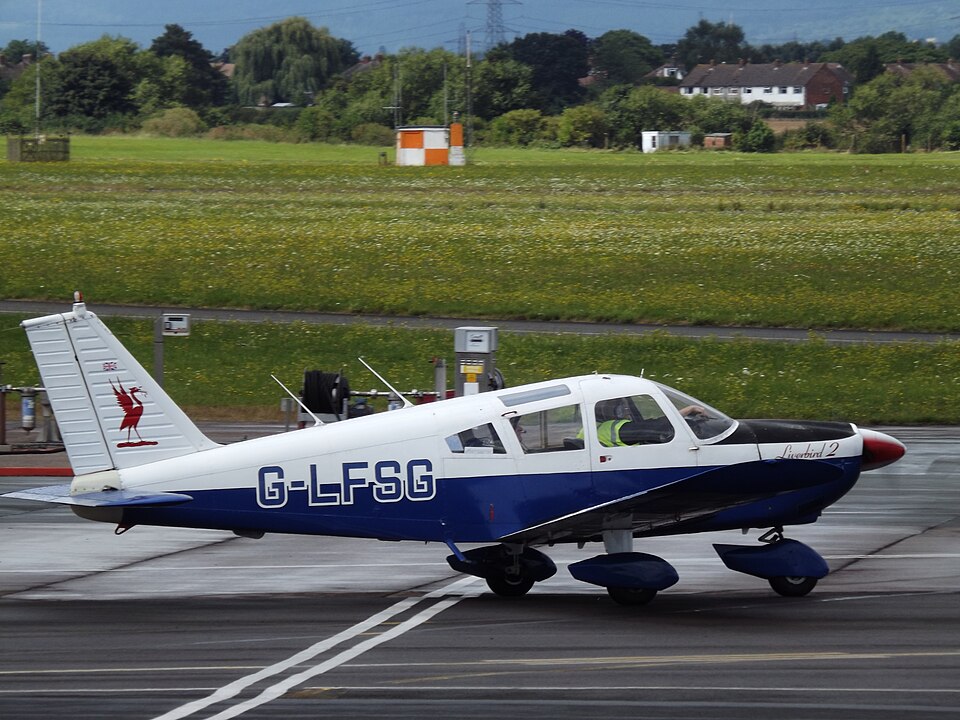
Aircraft registered G-LFSG
Aircraft registered G-LFSG. Photo: James from Cheltenham, Gloucestershire / CC BY-SA 2.0, via Wikimedia Commons

A student pilot experienced a runway excursion during takeoff at Liverpool Airport due to a wheelbarrowing effect, resulting in minor damage and no injuries.

Incident Overview

On 3 March 2001 at 1317 UTC, a Piper PA-28-180 aircraft, registration G-LFSG, departed the runway during takeoff at Liverpool Airport. The aircraft sustained minor damage, and the sole occupant, the student pilot, was uninjured.

Aircraft and Crew Information

The aircraft, a single-engine Piper PA-28-180 powered by a Lycoming O-360-A4A piston engine, was manufactured in 1970. The commander was a 48-year-old student pilot with 104 total flying hours, including 13 hours on the accident type. He had flown no hours in the preceding 90 days.

Sequence of Events

The pilot was conducting a 40-minute solo flight to fulfill recency requirements before his skill test. After completing pre-takeoff checks, he received clearance to line up and wait on Runway 09. The reported wind was 150° at 9 knots. The pilot applied into-wind aileron and set approximately half throttle to start the takeoff roll. At 30 knots indicated airspeed, the aircraft deviated left. The pilot corrected with right rudder, straightening the aircraft. As full power was applied and the aircraft reached an estimated 40 knots, it again veered left. Despite full right rudder input, the aircraft continued left. The pilot closed the throttle and applied the toe brakes, but the aircraft left the runway and ran onto adjacent grass, where it slowed and stopped. The pilot secured the aircraft by turning off fuel and ignition and exited normally. The airfield Rescue and Fire Fighting Service attended and recovered the aircraft.

Conclusions

Discussions between club training staff and the pilot concluded that, in attempting to maintain the runway centerline, the pilot had not allowed the nose landing gear to lift off. This resulted in a wheelbarrowing effect, where the main landing gear lifts off while the nose wheel remains in contact with the runway. The left rudder pedal applied to counter the crosswind would have pointed the nose wheel left, causing a sudden change in direction and the runway departure.

Probable cause

The wheelbarrowing effect, due to the pilot not allowing the nose landing gear to lift off, combined with left rudder application to counter the crosswind, resulting in the nose wheel pointing left and the aircraft leaving the runway.

All Piper PA-28 Cherokee accidents →

Frequently asked questions

What happened in the 3 Mar 2001 PIPER PA-28-180 accident near Liverpool Airport, GB?

A student pilot experienced a runway excursion during takeoff at Liverpool Airport due to a wheelbarrowing effect, resulting in minor damage and no injuries.

Were there any fatalities in the 3 Mar 2001 PIPER PA-28-180 accident?

No fatalities were recorded in this accident.

What aircraft was involved and where did it happen?

The accident on 3 Mar 2001 involved a PIPER PA-28-180, registration G-LFSG, operated by North East Aviation, at Liverpool Airport, GB.

What was the probable cause of the accident?

The wheelbarrowing effect, due to the pilot not allowing the nose landing gear to lift off, combined with left rudder application to counter the crosswind, resulting in the nose wheel pointing left and the aircraft leaving the runway.