No fatalities

Piper PA-28-181 Ground Incident at Deanland Airfield (G-BPOT)

Deanland Airfield, Lewes, East Sussex, GB

On February 7, 2004, a PIPER PA-28-181 (registration G-BPOT) operated by Private was involved in an aviation accident near Deanland Airfield, Lewes, East Sussex, GB. No fatalities were reported. Investigators recorded the probable cause as: Wet ground, a local downslope, and strong wind caused the aircraft to slide rather than turn; a higher engine power setting may have made turning to the right more difficult. This summary draws on records from the UK Air Accidents Investigation Branch (AAIB); 4 related events involving the same aircraft type or operator are linked below.

Sourcesthe UK Air Accidents Investigation Branch (AAIB)Primary reportUpdated 2026-10-18Data APIEditorial standards
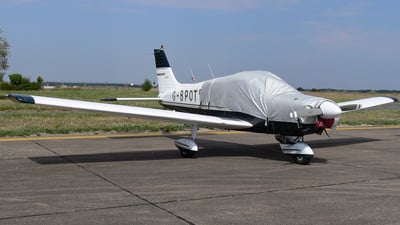
PIPER PA-28-181 photo
Photo via hexdb.io

A Piper PA-28-181 Cherokee Archer II (G-BPOT) struck a fence post while taxiing at Deanland Airfield on 7 February 2004. The pilot reported that wet ground, a downslope, and strong wind caused the aircraft to slide, leading to damage to the leading edge, wingtip, and propeller. No injuries occurred.

Aircraft and Flight Details

The aircraft involved was a Piper PA-28-181 Cherokee Archer II, registration G-BPOT, manufactured in 1977. It was powered by a single Lycoming O-360-A4M piston engine. The flight was a private ferry flight from Deanland Airfield, East Sussex, to Rochester Airport, following maintenance and an annual inspection. The pilot, aged 45, held a Private Pilot's Licence with 415 hours total flying experience (131 hours on type). The previous 90 days included 4 hours of flying, with 2 hours in the last 28 days. The pilot was the sole occupant and reported no injuries.

Location and Conditions

Deanland Airfield's runway 24 was in use at the time of the incident. The grass runway is 500 metres in length. The surface wind was from the south-west at 20 to 25 knots. The pilot described the ground conditions as very wet. The parallel taxiway was too soft for use, so the pilot backtracked along the runway. The runway is bounded on the northern side by a perimeter fence, which at the threshold end runs close alongside the runway. Additionally, there is a slope down towards the threshold.

Incident Sequence

As the pilot approached the end of the runway, he kept close to the fence in preparation for a right turn. He noted that he was using more power than usual for taxiing due to the wet conditions. When he attempted to turn the aircraft to the right, it continued moving straight ahead. Before he could prevent it, the port wingtip caught on a fence post, causing the aircraft to slew left and into the fence.

Damage

The aircraft sustained damage to the leading edge, wingtip, and propeller.

Pilot's Assessment

The pilot considered that the wet ground, combined with the local downslope and the strong wind, caused the aircraft to slide rather than turn. He also noted that turning to the right can be more difficult with the engine at a higher power setting.

Probable cause

Wet ground, a local downslope, and strong wind caused the aircraft to slide rather than turn; a higher engine power setting may have made turning to the right more difficult.

All Piper PA-28 Cherokee accidents →

Frequently asked questions

What happened in the 7 Feb 2004 PIPER PA-28-181 accident near Deanland Airfield, Lewes, East Sussex, GB?

A Piper PA-28-181 Cherokee Archer II (G-BPOT) struck a fence post while taxiing at Deanland Airfield on 7 February 2004. The pilot reported that wet ground, a downslope, and strong wind caused the aircraft to slide, leading to damage to the leading edge, wingtip, and propeller. No injuries occurred.

Were there any fatalities in the 7 Feb 2004 PIPER PA-28-181 accident?

No fatalities were recorded in this accident.

What aircraft was involved and where did it happen?

The accident on 7 Feb 2004 involved a PIPER PA-28-181, registration G-BPOT, operated by Private, at Deanland Airfield, Lewes, East Sussex, GB.

What was the probable cause of the accident?

Wet ground, a local downslope, and strong wind caused the aircraft to slide rather than turn; a higher engine power setting may have made turning to the right more difficult.