No fatalities

Runway Excursion after Landing Following Radio Issues at Leicester (G-BPAY)

Leicester Airport, GB

On July 23, 2001, a PIPER PA-28-181 (registration G-BPAY) operated by White Waltham Airfield Ltd was involved in an aviation accident near Leicester Airport, GB. No fatalities were reported. Investigators recorded the probable cause as: The pilot's preoccupation with radio failure and circuit problems led to a high and fast approach and failure to execute a go-around; additionally, a high ratio of dual to solo flights affected his decision-making. This summary draws on records from the UK Air Accidents Investigation Branch (AAIB); 4 related events involving the same aircraft type or operator are linked below.

Sourcesthe UK Air Accidents Investigation Branch (AAIB)Primary reportUpdated 2026-10-18Data APIEditorial standards
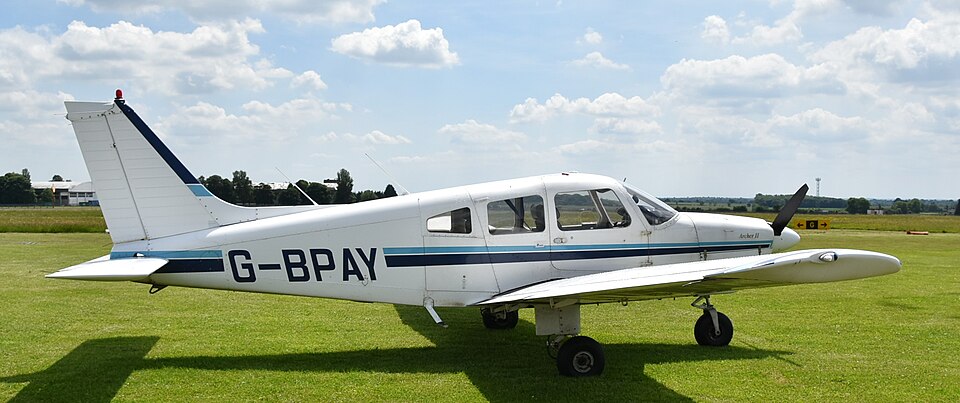
Aircraft registered G-BPAY
Aircraft registered G-BPAY. Photo: Alec Wilson from Khon Kaen, Thailand / CC BY-SA 2.0, via Wikimedia Commons

A Piper PA-28-181 landed long and departed the runway at Leicester after the pilot became preoccupied with a radio failure. The aircraft sustained minor damage; no injuries.

Incident Summary

On 23 July 2001, at 1135 hours UTC, a Piper PA-28-181, registration G-BPAY, experienced a runway excursion at Leicester Airport following a private flight. The aircraft touched down long on Runway 22 and subsequently ran off the end into a ploughed field, coming to a stop. The nose landing gear and propeller were damaged. The pilot and the sole passenger were uninjured.

Flight Details

The pilot, who held a Private Pilot's Licence with 140 total flying hours, planned a one-hour local flight from Leicester. Before departure, he attempted a radio check with Leicester Radio but received no response. He was aware that the Air Ground station was not continuously manned and was not initially concerned. Once airborne, the pilot could hear transmissions from other aircraft and ground stations and attempted radio checks with other stations, but without success. He then became concerned about the serviceability of his radio and decided to return to land for a check.

During the circuit, the pilot could hear other aircraft joining but did not have visual contact with them. He continued the circuit, making 'blind' radio calls at appropriate positions. The approach was high and fast, and the aircraft touched down halfway along the 490-metre runway. Realising that he could not stop safely, the pilot began to initiate a go-around but then changed his mind and applied heavy braking. The aircraft departed the end of Runway 22 and entered a ploughed field, where it quickly came to a halt.

Pilot's Report

In his report, the pilot stated that he became highly preoccupied with the apparent transmitter failure and the difficulties locating other aircraft in the circuit. He acknowledged that he should have executed a go-around from the approach but allowed his concerns to override his decision-making. He also noted that a high ratio of dual to solo flights had adversely affected his airborne decision-making and made him over-reliant on someone else confirming his decisions.

Probable cause

The pilot's preoccupation with radio failure and circuit problems led to a high and fast approach and failure to execute a go-around; additionally, a high ratio of dual to solo flights affected his decision-making.

All Piper PA-28 Cherokee accidents →

Frequently asked questions

What happened in the 23 Jul 2001 PIPER PA-28-181 accident near Leicester Airport, GB?

A Piper PA-28-181 landed long and departed the runway at Leicester after the pilot became preoccupied with a radio failure. The aircraft sustained minor damage; no injuries.

Were there any fatalities in the 23 Jul 2001 PIPER PA-28-181 accident?

No fatalities were recorded in this accident.

What aircraft was involved and where did it happen?

The accident on 23 Jul 2001 involved a PIPER PA-28-181, registration G-BPAY, operated by White Waltham Airfield Ltd, at Leicester Airport, GB.

What was the probable cause of the accident?

The pilot's preoccupation with radio failure and circuit problems led to a high and fast approach and failure to execute a go-around; additionally, a high ratio of dual to solo flights affected his decision-making.