Accident Sequence
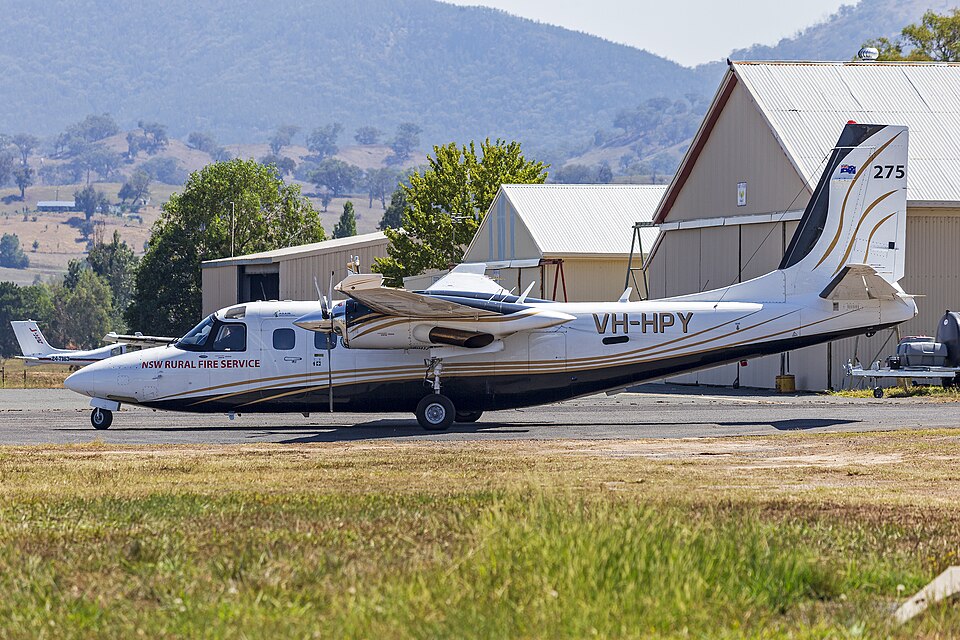
On the morning of 4 November 2023, a Gulfstream 695A, registered VH-HPY, operated by AGAIR, departed Toowoomba, Queensland, on an instrument flight rules flight to Mount Isa. The aircraft carried a pilot and two camera operators to conduct line scanning of fire zones north of Mount Isa. About 1 hour and 50 minutes into the flight, while cruising at flight level 280, air traffic control (ATC) lost radio contact with the pilot. Over the next 30 minutes, ATC attempted to re-establish contact using alternate frequencies and relaying messages via other aircraft. VH-HPY diverged from its track, prompting ATC to declare an uncertainty phase.
Approximately 20 minutes later, ATC called the pilot's mobile telephone. During the brief conversation, the pilot's speech was slow and flat. ATC upgraded the status to an alert phase and initiated hypoxic pilot emergency procedures. About 10 minutes later, the crew of a nearby aircraft, requested by ATC, established contact with the pilot. The alert phase was downgraded to an uncertainty phase, and shortly after, ATC re-established direct contact. The uncertainty phase was cancelled one minute later. The pilot confirmed the oxygen system was operating normally and received clearance to undertake line scanning.
Over the following four minutes, the pilot repeated the clearance four times, appearing uncertain. Radio recordings showed the pilot's speech rate and volume had substantially decreased and continued to worsen. The final transmission had the slowest speaking rate of the flight, with stuttering and operational mistakes. ATC did not attempt contact again until about 18 minutes later, but no further responses were received.
Loss of Control and Impact
Shortly after, the aircraft departed controlled flight, entering a descending anticlockwise turn with an increasing rate of descent. At about 10,500 feet, it likely transitioned into an aerodynamic spin, with an average descent rate of approximately 13,500 feet per minute. The aircraft collided with terrain 55 km south-east of Cloncurry. The three occupants were fatally injured, and the aircraft was destroyed by impact forces and a fuel-fed post-impact fire.
Contributing Factors
The investigation identified several contributing factors. The pilot's ability to safely operate the aircraft was almost certainly significantly degraded by the onset of altitude hypoxia. While at flight level 280, both power levers were probably reduced without an appropriate descent, causing a progressive airspeed reduction. The aircraft entered a descending turn, and control inputs at about 10,500 feet—likely an attempt to recover—transitioned the aircraft from a high-speed descent to an unrecoverable spin. The pilot had a normalized practice of operating VH-HPY with a cabin altitude requiring supplemental oxygen, without suitable oxygen supply, increasing hypoxia risk. The pressurization system probably did not attain the required cabin altitude at flight level 280, and the pilot likely knowingly continued with an excessive cabin altitude. AGAIR management was aware of a long-term intermittent pressurization defect and, through inaction and direct involvement, permitted operations at excessive cabin altitude.
Safety Issues
Safety issues identified include ineffective operational control by AGAIR management over line scanning activities, resulting in the pressurization defect not being formally recorded and hazardous practices continuing. The head of flying operations did not communicate critical safety information about the pressurization defect when contacted by ATC about possible hypoxia. Controllers likely reduced vigilance after being told operations were normal and did not re-identify hypoxia during the pilot's speech deterioration. Additionally, AGAIR operated Gulfstream 690 and 695 aircraft with undocumented defects, limiting assessment of operational impacts. The Airservices Australia hypoxic pilot emergency checklist lacked guidance on ceasing emergency response, increasing risk of inappropriate downgrading. A 2019 Civil Aviation Safety Authority surveillance event of AGAIR did not crosscheck maintenance releases against aircraft logbooks, limiting detection of defect non-reporting.