Incident Overview
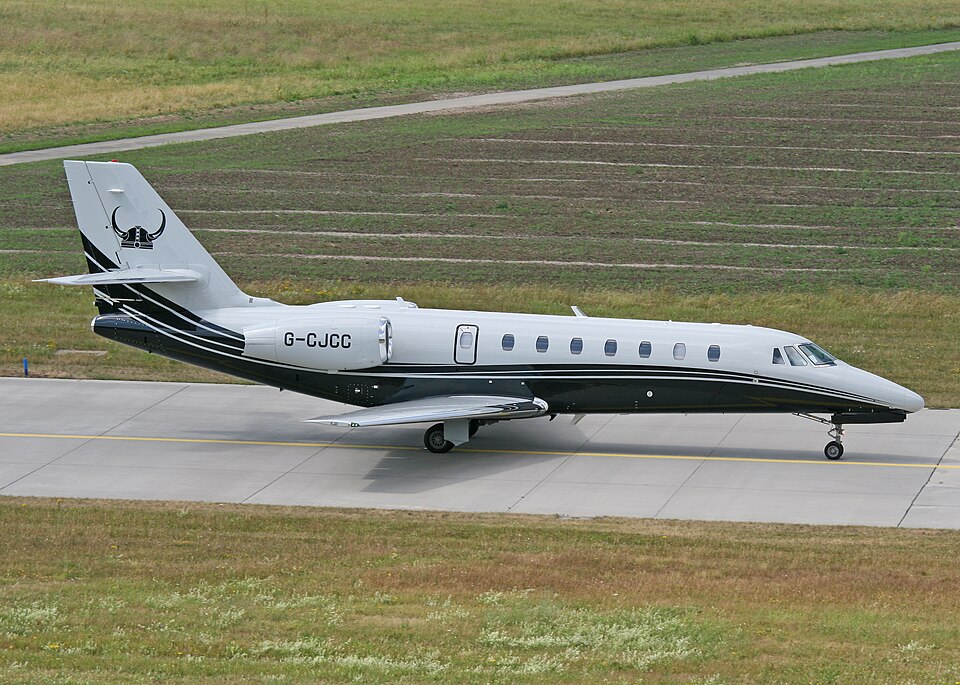
On 30 September 2010, a Cessna Citation 680 Sovereign (registration G-CJCC) experienced a serious incident during climb after departure from London Luton Airport. The aircraft was operating a commercial passenger flight to Milas-Bodrum Airport, Turkey, with 3 crew and 5 passengers. No injuries were reported, and no damage occurred.
Sequence of Events
As the aircraft passed FL300 for FL320, the DC EMER BUS L amber Crew Alerting System (CAS) message appeared. The crew referred to the Emergency/Abnormal Procedures checklist and concluded there was a fault on the left main electrical bus. They selected the left generator to OFF. Subsequently, several systems lost power, including flaps, left fuel quantity indication, and the commander's Primary Flight Display. The commander handed control to the co-pilot, who remained the handling pilot.
The co-pilot noticed increasing right aileron control input was needed to maintain wings-level attitude. The crew elected to return to Luton due to favorable weather and proximity (20 minutes flying time). A flapless landing was completed without further incident.
Fuel System Behavior
After landing, when the aircraft was powered again, all systems operated normally. The left fuel tank showed approximately 5,500 lbs (full), and the right tank showed approximately 3,300 lbs. The crew had not selected the fuel cross-feed during the flight.
The aircraft has two separate integral wing fuel tanks, each with 5,500 lbs capacity. Normally each engine is supplied from its on-side tank via a motive-flow pump. A selectable cross-feed allows either tank to supply the opposite engine, and when selected, the cross-feed valve opens and the electric boost pump in the selected tank operates.
Ground Testing and Findings
Under AAIB supervision, ground testing revealed that removing power from the left main electrical bus caused the fuel cross-feed valve to open and the right fuel boost pump to operate, even with the cross-feed selector switch OFF. CAS messages FUEL CROSS FEED and R BOOST PUMP appeared. Tests on another similar aircraft produced identical results.
Recorded data showed that the motive-flow shutoff valves on both engines did not move during the incident. This allowed motive-flow fuel to be returned to both tanks, resulting in uncommanded fuel transfer from the right to the left tank. Over the 20-minute period, sufficient fuel transferred to create a 2,200 lbs imbalance. The crew was unaware because only the right fuel quantity indication was available.
Safety Recommendations
The AAIB issued two safety recommendations:
- Safety Recommendation 2010-090: Cessna Aircraft Company should immediately inform all operators of Cessna Citation 680 Sovereign aircraft that uncommanded fuel transfer will occur if the left main electrical bus is not powered.
- Safety Recommendation 2010-091: The Federal Aviation Administration should require Cessna to take suitable actions to prevent uncommanded fuel transfer when the left main bus is unpowered.