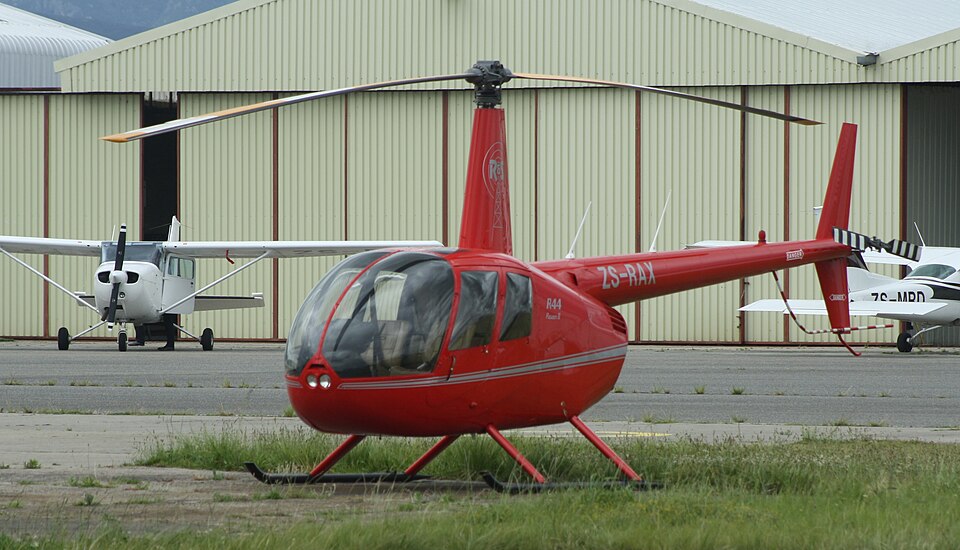
Incident Overview
On 2 October 2006, at approximately 1200Z, a Robinson R44 Raven II helicopter (registration ZS-RAX) operated by a private pilot departed from Cullinan for a return flight to Grand Central Aerodrome (FAGC). The pilot, who was also the owner of the helicopter, had flown from Grand Central to Cullinan earlier that morning. During the morning flight, he noticed a low-frequency vibration but attributed it to turbulence. On the return flight later in the afternoon, the vibration persisted and, according to the pilot, increased in amplitude.
Landing and Inspection
After an uneventful landing at Grand Central, the pilot requested a maintenance engineer to inspect the helicopter and described the vibration concern. During the inspection of the main rotor blades, one blade (serial number 2981C) exhibited severe deformation, including bending of the blade and wrinkling on the upper skin surface. Damage was also found on the teeter stop of the main rotor assembly associated with that blade. The other main rotor blade showed no signs of damage or deformation.
Manufacturer Evaluation
The helicopter manufacturer was consulted, and the evidence was forwarded for evaluation. According to the manufacturer, this was not an isolated case. They stated that the damage could be attributed to mishandling or manhandling of the blade by a person who did not comply with the placard warning located on the underside of each main rotor blade tip, which reads: "Never Pull Down/Push Up Opposite Blade" (Pilot’s Operating Handbook, Section 2, Page 2-11).
Pilot and Aircraft Information
The pilot held a valid private pilot’s license with the aircraft type endorsed. He had 88.0 total flying hours, all on the Robinson R44 type, and was 37 years old. The aircraft had accumulated 20.0 hours since new at the time of the event and held a valid Certificate of Airworthiness. No injuries or fatalities occurred; there was one person on board (the pilot) and none were injured or killed.
Weather Conditions
Surface wind was 350° at 11 knots, temperature 25°C, visibility greater than 10 kilometers, and conditions were CAVOK (clear and visibility OK).