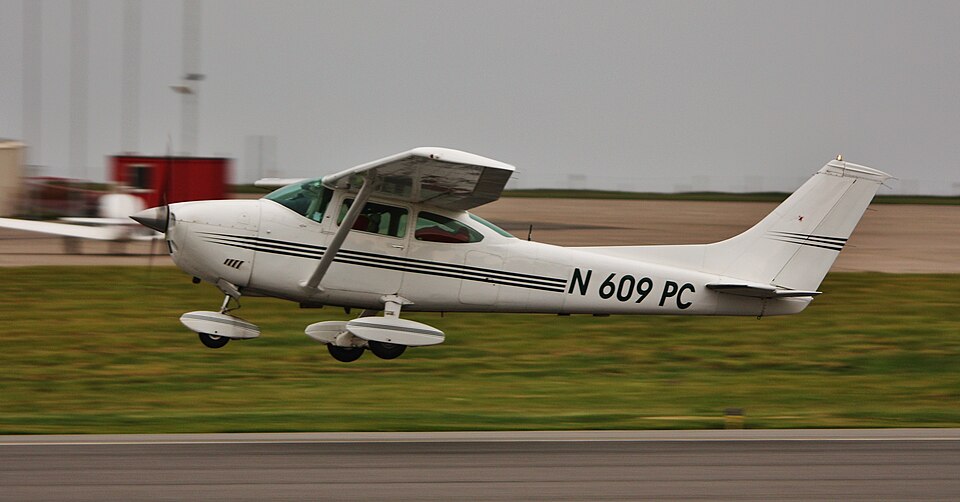
History of the Flight
On 28 February 2018, a Cessna 182P (N609PC) departed Touquet-Côte d'Opale aerodrome at approximately 09:10 local time for an IFR cross-country flight to Lognes-Émerainville aerodrome. The pilot, who held an Airline Transport Pilot License and was an IFR and twin-engine instructor, was accompanied by a passenger in the right front seat. At the end of the climb, while at flight level 70, the occupants detected a smell of smoke, vibrations, and abnormal engine noise. The pilot shut down the engine and attempted to restart it without success. The passenger, who had more flight experience, took control, made an emergency call, and attempted to glide to Abbeville aerodrome. Realizing the aerodrome was unreachable, he selected a field and executed an off-field forced landing at approximately 09:40. After landing, both pilots inspected the aircraft and observed a perforated crankcase.
Aircraft and Engine Information
The aircraft was equipped with a Continental O-470-R engine, with a certificate of airworthiness issued on 20 July 2004. The engine had accumulated 756 operating hours since new, with a calendar age of about 14 years. The last maintenance operation occurred on 13 February 2018, 15 days prior to the incident, during which cylinder No. 2 was replaced after pilots reported vibrations. The mechanic who performed the replacement noted that a valve on that cylinder had blocked, causing a lack of compression.
Examination of the Engine
The engine was removed approximately 15 days after the incident and examined by the BEA. The damage was concentrated around cylinder No. 1's connecting rod. Findings included sudden failure of the crankcase, the rod broken into multiple fragments, partial destruction of the piston, and damage to the crankpin with signs of intense heating. Fatigue cracking, very localized and shallow, was identified on the rod cap fragments, initiating on the inner side of the rod (crankshaft end). This cracking zone exhibited abnormally high hardness of the material. The cause of the high hardness could not be determined. Debris from rod bearings was recovered in the oil sump as strips.
EDM Data Analysis
An Engine Data Management (EDM) computer recorded engine parameters during the flight. Cylinder temperatures remained below the warning threshold of 450 °F. Exhaust gas temperatures were normal except for a sudden increase in the difference between cylinders around 09:25, exceeding the warning threshold of 500 °F, reaching approximately 1,100 °F. This was due to a substantial drop in exhaust gas temperature for cylinder No. 1 while others peaked and dropped, consistent with a crankcase perforation. The subsequent engine restart attempt and final shutdown were also recorded.
Comparison with Previous Accident
The BEA compared this incident to an accident involving a Cessna U206F (F-HNCM) on 9 April 2017, which also involved an in-flight engine shutdown due to a rod failure. Both cases showed similar damage patterns, including crankpin heating, rod bearing debris, and crankcase perforation. However, the fatigue crack initiation differed: in N609PC, the crack originated on the inner side of the rod with localized fatigue and material hardness changes; in F-HNCM, the crack started on the outer side with a larger fatigue zone and no material hardness alteration.
Conclusions
The BEA concluded that a fatigue failure of rod No. 1 caused the engine shutdown. The exact cause of the fatigue failure could not be determined.