Incident Overview
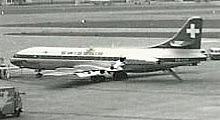
On April 25, 1962, at 07:35 MEZ, a Swissair SE-210 Caravelle III with registration HB-ICT departed Geneva for Paris. The aircraft was carrying 66 passengers and a six-person crew. Shortly after takeoff, the nose gear jammed in a position nearly fully retracted. Due to this mechanical failure, the flight was diverted to Zurich-Kloten.
Emergency Landing
The aircraft arrived at Zurich-Kloten and executed an emergency landing at 09:56 MEZ. Prior to touchdown, excess fuel was consumed and necessary precautions were taken. The landing itself was smooth, but the aircraft sustained severe damage to the nose section of the fuselage. All passengers and crew members remained unharmed.
Investigation Findings
The official investigation determined that the root cause of the nose gear blockage was an unauthorized intervention in the braking mechanism. This interference occurred on the evening of April 24, 1962, at Geneva Airport. A member of the maintenance staff had accessed the gear for purposes unrelated to standard operations. The alteration was neither corrected by the individual nor detected by other personnel before the subsequent flight.