What happened
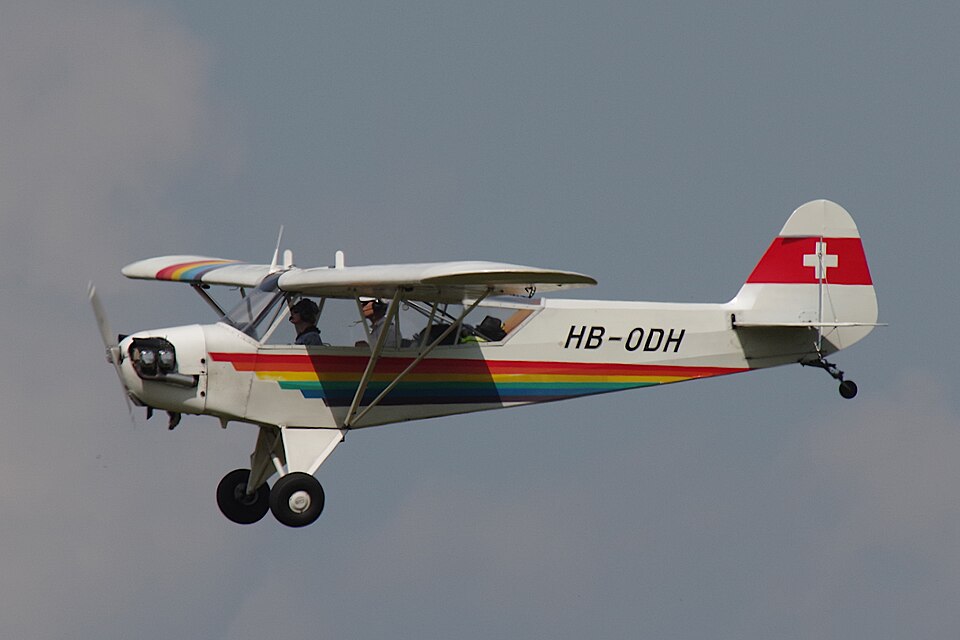
On July 21, 1963, a flight instructor and two students departed Kägiswil for Triengen to conduct off-field landing practice. The instructor and one student flew ahead in a separate aircraft, while the second student followed solo in a Piper Cub J3C, registration HB-ODH.
Upon arriving at Triengen, the student pilot attempted several approaches to the grass runway. The first approach was performed at an excessive altitude and speed. Subsequent attempts were consistently too low, with the aircraft making contact with standing crops. During the fifth attempt, the aircraft struck a grain field approximately 300 meters before the runway threshold. Despite applying full power, the aircraft sank into the crops and underwent a capsize. The pilot escaped without injury, but the aircraft sustained heavy damage.
The investigation
The investigation examined the training environment, the pilot's experience, and the communication between the instructor and student. The student pilot had significant flight experience, including 195 landings, but had performed all previous takeoff and landing training exclusively on the paved runway at Kägiswil. The investigation also noted that the instructor had not provided a detailed briefing regarding the specific challenges of the Triengen airfield, as he mistakenly assumed the student was already familiar with the location. Furthermore, no signaling flag was used, and no specific hand signals had been pre-arranged for the landing sequence.
Findings
- The primary cause was the decision to conduct the first off-field landing practice at a location significantly more challenging than the student's previous training environment.
- The student pilot became overwhelmed by the difficult landing conditions, leading to a cycle of repeated errors.
- A lack of clear communication and standardized signaling contributed to confusion; the student misinterpreted the instructor's hand signals during the second approach, believing they indicated a need for a lower approach.
- The student's inability to pause and reassess the situation after initial failures led to increased psychological tension and physical fatigue.