Summary
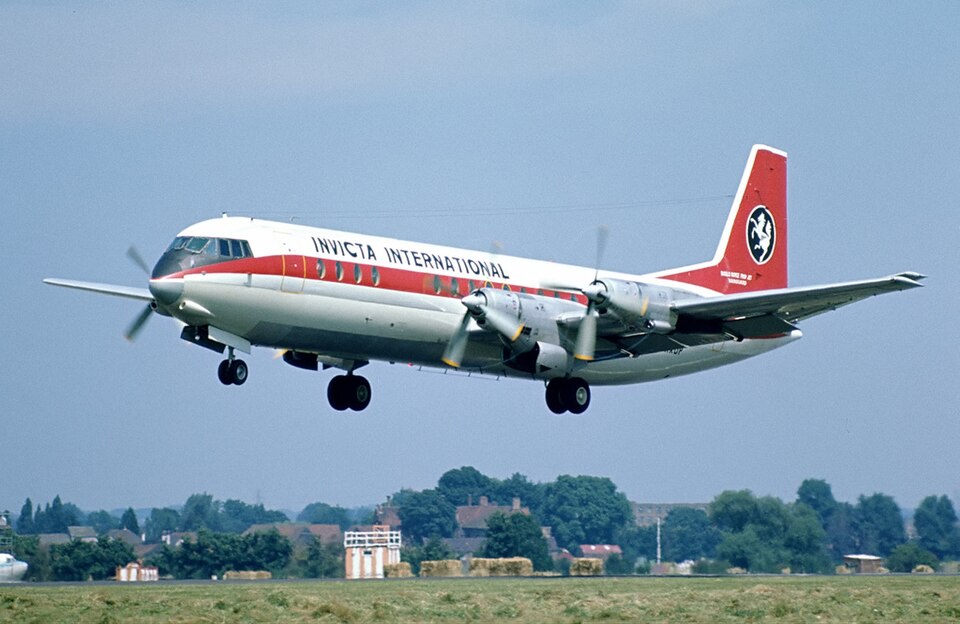
On 10 April 1973, Invicta International Airlines Flight 435, a Vickers Vanguard 952 (registration G-AXOP), crashed near Hochwald, Switzerland, while attempting to land at Basel-Mulhouse Airport. The accident occurred at 0913 GMT after the crew conducted two unsuccessful instrument landing system (ILS) approaches to runway 16. The aircraft struck a wooded ridge approximately 16 km south of the airport and was destroyed. Of the 139 passengers and 6 crew on board, 104 passengers and 4 crew suffered fatal injuries, 35 passengers and 1 flight attendant were injured, and 1 flight attendant remained unharmed.
Flight History
The aircraft departed Luton for Bristol to pick up 139 passengers for a charter flight to Basel. After departing Bristol at 0719 GMT, the flight proceeded routinely until reaching the Basel-Mulhouse approach control area. The crew reported over the Héricourt beacon at 0849 GMT and were cleared to descend. After initial instructions, the crew made two ILS approaches to runway 16, but both were abandoned. During the second missed approach, the aircraft deviated south and struck terrain at approximately 0913 GMT.
Aircraft and Crew
The aircraft was a Vickers Vanguard 952, registration G-AXOP, operated by Invicta International Airlines. The cockpit crew consisted of two captains, with the commander serving as pilot-in-command on the left seat. The commander held a valid British airline transport pilot's license with type ratings for the Vickers Vanguard. The cabin crew comprised four flight attendants.
Accident
The accident occurred in daylight, but the aircraft was nearly always in clouds. Ceiling was low, visibility was reduced by snow showers, and wind was light and turbulent from the north. The aircraft struck a wooded hillcrest in the Jura range near the hamlet of Herrenmatt, Hochwald, then crashed and partially caught fire.
Investigation Findings
The accident investigation established that the crew lost orientation during two ILS approaches conducted under instrument flight conditions. Contributing factors included inadequate navigation (particularly an imprecise start of the final approach in terms of altitude and approach baseline), confusion of navigational aids, and insufficient cross-checking of instruments. Poor reception of medium-frequency beacons, technical defects in the number 1 localizer receiver and number 2 glide slope receiver hampered the crew's navigational tasks.
Probable Cause
The probable cause of the accident was loss of orientation during two ILS approaches conducted under instrument flight conditions.