Background
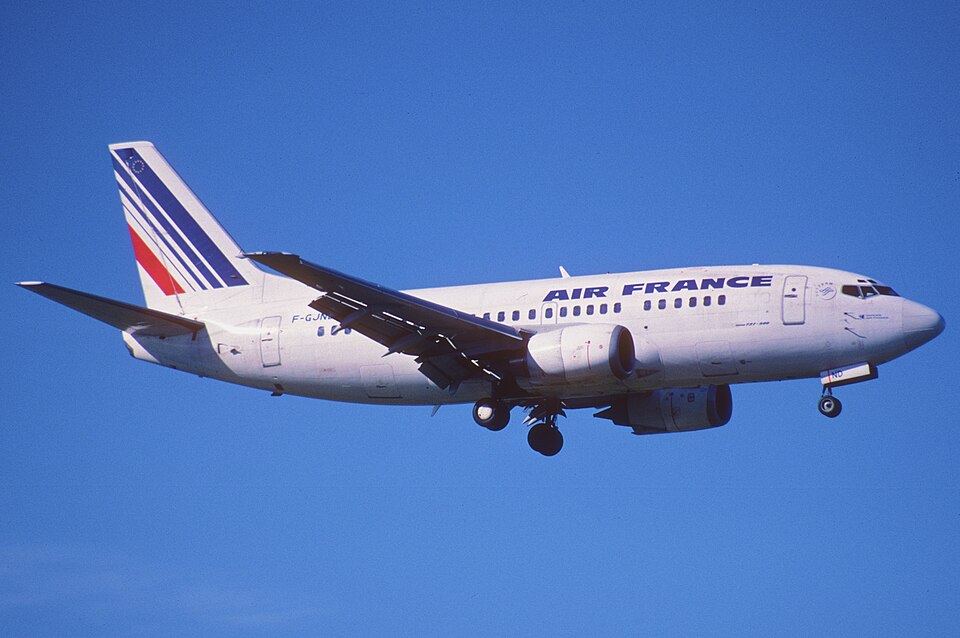
On 23 November 2002, at Zurich Airport, a runway incursion occurred between two commercial aircraft. The first aircraft, an Air France Boeing 737-528 (registration F-GJND), was operating flight AFR1855 from Zurich to Paris-Charles de Gaulle. The second aircraft, a Swiss Saab 2000 (registration HB-IZW), was operating flight SWR1168 from Zurich to Stuttgart. The weather was good with sunshine.
Event
At 12:23 UTC, the Saab 2000 (SWR1168) was cleared for takeoff on runway 28 and began its takeoff roll. The Boeing 737 (AFR1855) had been instructed by Apron South control to taxi via taxiways MIKE, ECHO, and ALPHA to the holding point of runway 28. Instead of turning right onto taxiway ALPHA before the runway, the Boeing 737 continued straight on taxiway ECHO and crossed runway 28 without authorization. The Saab 2000 became airborne and overflew the Boeing at an altitude of approximately 40-50 meters. The incident was classified as an airprox (air traffic incident).
Findings
The report stated that the flight crew of AFR1855 had missed the markings on the ground, including the “RWY AHEAD” sign, stop bar, and runway guard lights, and that their perception was impaired by sunlight. The commander of SWR1168 noticed the Air France aircraft approaching the runway at a relatively high taxi speed. Controllers in the tower also perceived the Boeing to be moving at a high speed. Calculations showed that the Boeing would have taken about 16 seconds at 20 knots or about 10 seconds at 30 knots to travel from the turn-off point of taxiway ECHO onto ALPHA to the runway shoulder. The stop bars on taxiway ECHO south of runway 28 were switched on at the time of the incident. Air France’s operating manual warned pilots of a tendency to taxi at higher speeds and recommended not exceeding 30 knots straight ahead and 10 knots in turns.
Assessment
The report noted that the commander of AFR1855 was pilot flying and had no time pressure as no time slot was assigned. After pushback from stand G02, the crew checked for obstacles on taxiway MIKE. After turning onto taxiway ECHO, a longer straight section followed. The cabin crew reported the cabin ready for takeoff. The assessment highlighted that the markings and stop bars were present and operational.