Synopsis
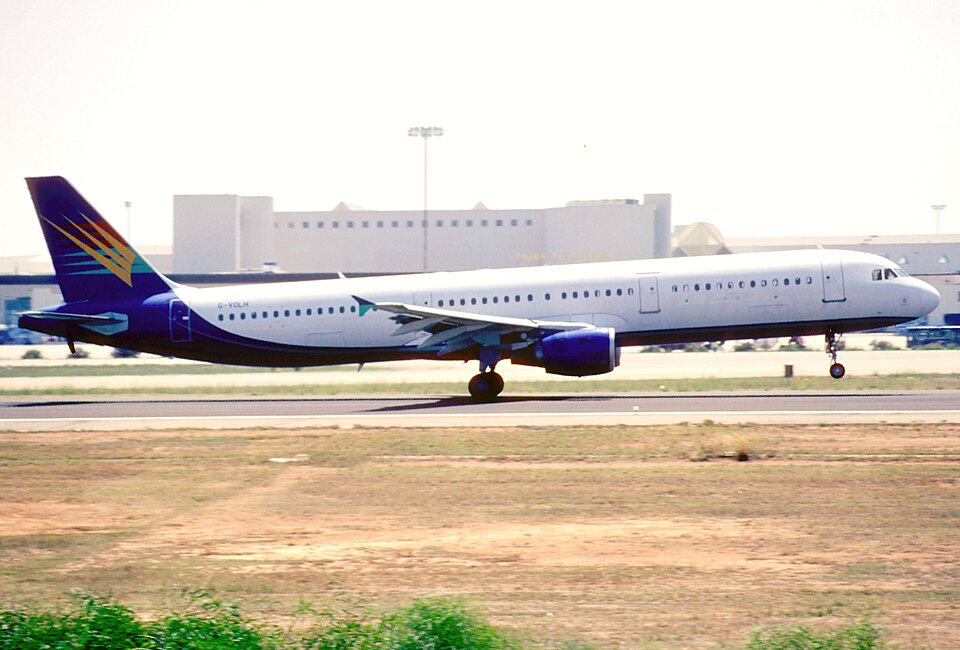
On 18 April 2001, at 07:26 UTC, an Airbus A321-211 registered G-VOLH departed Manchester, United Kingdom, with 7 crew and 167 passengers on a charter flight to Funchal Airport, Madeira Island. The flight was uneventful until landing. The aerodrome was clearly visible, and the commander conducted a visual approach in accordance with STAR charts. The approach was stabilized, despite encountering windshear at GELO. At 30 feet radio altitude, the commander noticed a high sink rate and applied full aft sidestick, but the aircraft landed heavily and bounced. On the second touchdown, the aircraft's tail contacted the runway, resulting in structural damage to the tail. There were no personal injuries.
Flight History
The aircraft departed Manchester at 07:26 UTC and transited uneventfully to Funchal Airport. Surface wind at the aerodrome was 020° at 12 knots, varying from 350° to 050°. The commander, as handling pilot, briefed for a VOR/Visual approach to Runway 05. The procedure involved passing over the Madeira VOR/DME, located approximately 5 nm northeast of the airfield, then proceeding outbound on the 213° radial, descending to a recommended altitude of 1,140 feet but not lower than 940 feet minimum. The missed approach point was 4 nm from the VOR/DME abeam the aerodrome.
Approach and Landing
The aircraft descended to 1,700 feet using autopilot and autothrust, at which point the autopilot was disconnected but autothrust remained engaged. Passing over the Madeira VOR at 1,500 feet, the aircraft continued descending to 1,200 feet and flew level. The commander continued visually, configuring for landing with base turn initiated at 6.5 nm from the DME. PAPIs were offset 5° right. The approach crossed GELO at 850 feet and ROSARIO at 460 feet. Despite a windshear encounter at GELO, the approach was stabilized. At 30 feet RA, the commander noted increased sink rate and closed the thrust levers, applying full aft sidestick. The aircraft landed heavily and bounced. During the bounce, the commander reduced aft sidestick but maintained a reduced pitch-up demand; pitch attitude continued increasing. On the second touchdown, the tail contacted the ground. The commander reapplied full aft sidestick to prevent nose gear impact.
Post-Landing
The aircraft taxied to the parking stand, where inspection confirmed a tail strike. Landing weight was 71,483 kg with Vref 137 and Vapp 142 knots.
Details from Flight Data
During the final approach, after passing over the road at 147 feet and then 57 feet radio altitude, pitch attitude (approximately 5° nose up) and ground speed (126 kts) remained constant for four seconds, while airspeed decayed from 141 to 131 kts. Normal acceleration dropped to 0.92 G at 34 feet. The commander closed throttles at 23 feet, applied nearly full aft sidestick for 0.5 seconds, then briefly relaxed. Descent rate increased to 720 ft/min. Full aft sidestick was reapplied at 11 feet. Recorded wind showed a headwind reduction of 10 kts. Touchdown occurred at 132 kts with 2.04 g normal acceleration, pitch attitude increasing through 7.7° nose up. Automatic height calls were recorded. Ground spoilers deployed within one second as the aircraft bounced. During the bounce, sidestick input was reduced. Maximum pitch attitude of 10.9° occurred 0.25 seconds before the second touchdown at 129 kts and 1.47 g, where the tail section likely contacted the runway. After touchdown, full aft sidestick was reapplied until nose gear contacted the runway. Thrust reverse and medium autobrake were used to slow the aircraft to 50 knots, then manual braking.
Conclusion
The aircraft sustained tail structural damage. No injuries were reported.