No fatalities

1999 Cessna 172RG Gear-Up Landing at Torres Vedras (CS-DAG)

Torres Vedras, PT

On July 26, 1999, a Cessna 172 (registration CS-DAG) operated by Private was involved in an aviation accident near Torres Vedras, PT. No fatalities were reported. Investigators recorded the probable cause as: The pilot's failure to use the landing checklist and verify that the landing gear was down and locked, resulting in a gear-up landing. This summary draws on records from the Portuguese Office for the Prevention and Investigation of Accidents in Civil Aviation and Rail (GPIAAF); 1 related events involving the same aircraft type or operator are linked below.

Sourcesthe Portuguese Office for the Prevention and Investigation of Accidents in Civil Aviation and Rail (GPIAAF)Primary reportUpdated 2026-10-18Data APIEditorial standards
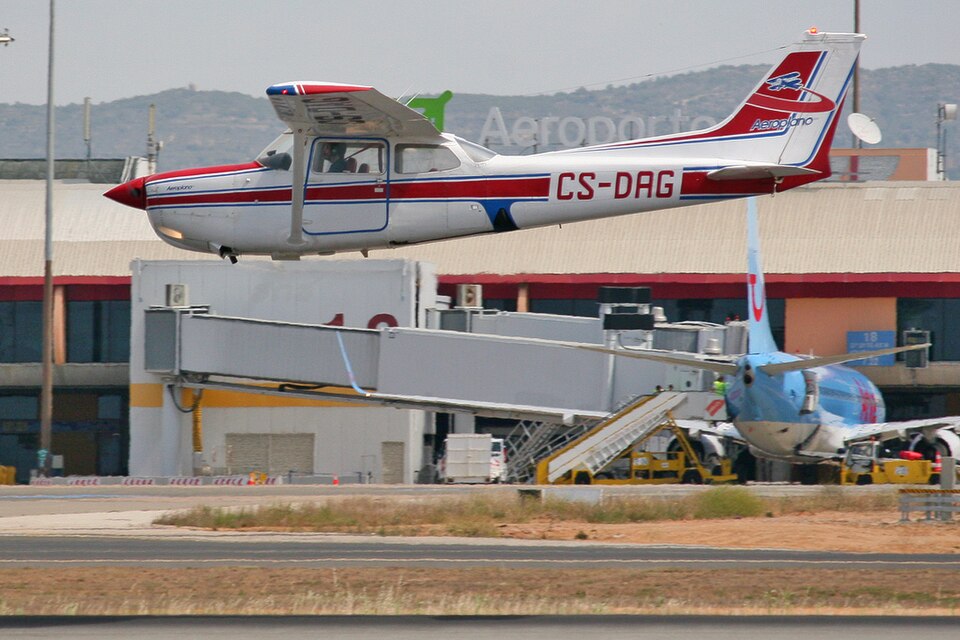
Aircraft registered CS-DAG
Aircraft registered CS-DAG. Photo: curimedia / CC BY 2.0, via Wikimedia Commons

In July 1999, a Cessna 172RG (CS-DAG) operated by Aeroplano made a gear-up landing at the Municipal Airport of Torres Vedras. The pilot, who was the sole occupant, was uninjured, and the aircraft sustained minor damage to its underside.

Incident Overview

On July 26, 1999, at approximately 15:00 local time, a Cessna 172RG with registration CS-DAG landed on Runway 17 at the Municipal Airport of Torres Vedras in Santa Cruz, Portugal. The aircraft was owned and operated by Aeroplano, an aerial work company based at the same airfield. The flight was a local recreational VFR (Visual Flight Rules) sortie that had departed from the same location at 14:40 local time with one person on board.

Operational Context

During the approach, the pilot received radio information from the airport's Air Traffic Information Service indicating winds between 200 and 240 degrees at 12 to 15 knots. This wind direction was crosswind relative to Runway 17/35. The approved flight manual for the Cessna 172RG specifies a maximum demonstrated crosswind of 15 knots, meaning the conditions were near the operational limit.

Accident Sequence and Findings

The pilot landed with the landing gear retracted. According to the investigation, the pilot performed the approach and landing procedures from memory rather than using the required checklist. Due to distraction caused by the strong crosswind, the pilot failed to verify that the green lights indicating the gear was down and locked were illuminated and did not hear the warning horn for unblocked gear.

Damage and Investigation Results

The aircraft sustained minor damage to its belly, with no indications of rivet damage. All antennas mounted on the lower fuselage, including ADF Loop and Sense, Transponder, and DME units, were destroyed. The engine exhaust was slightly dented. No fire occurred, and the pilot exited the aircraft unharmed.

Post-accident tests conducted by DGAC investigators on the retractable landing gear system revealed no mechanical anomalies or malfunctions. The warning horn functioned correctly when tested. The investigation concluded that the accident was caused solely by human error, specifically the failure to use the checklist and verify gear status during a critical phase of flight under challenging wind conditions.

Probable cause

The pilot's failure to use the landing checklist and verify that the landing gear was down and locked, resulting in a gear-up landing.

All Cessna 172 accidents →

Frequently asked questions

What happened in the 26 Jul 1999 Cessna 172 accident near Torres Vedras, PT?

In July 1999, a Cessna 172RG (CS-DAG) operated by Aeroplano made a gear-up landing at the Municipal Airport of Torres Vedras. The pilot, who was the sole occupant, was uninjured, and the aircraft sustained minor damage to its underside.

Were there any fatalities in the 26 Jul 1999 Cessna 172 accident?

No fatalities were recorded in this accident.

What aircraft was involved and where did it happen?

The accident on 26 Jul 1999 involved a Cessna 172, registration CS-DAG, operated by Private, at Torres Vedras, PT.

What was the probable cause of the accident?

The pilot's failure to use the landing checklist and verify that the landing gear was down and locked, resulting in a gear-up landing.