Background
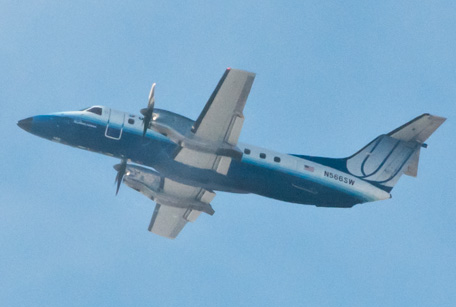
The incident involved an airplane accumulating 3,757 total flight hours. Examination of the elevator trim units revealed that one trim actuator had leaking shaft seals, cracked packing, and a seized bearing. The second actuator was dirty with minor corrosion on the hardware, leaking shaft seals, and a rigging device installed. The manufacturer had previously investigated similar occurrences.
Incident Description
During the initial descent from 22,000 feet mean sea level (msl) to 14,000 feet msl, the elevator trim wheel moved to the forward stop. It then made a "snapping" motion midway through the movement and moved aft. The trim wheel continued moving back and forth, so the crew disconnected the autopilot and trim. The airplane pitched up, and the captain had to apply moderate forward pressure to maintain pitch control. The trim wheel remained jammed, but one crewmember could control the airplane. At 12,000 feet msl and approximately 23 degrees Fahrenheit outside air temperature, the trim was immovable. Between 5,000 and 4,000 feet msl, the trim wheel became movable. By the time the airplane reached traffic pattern altitude, the trim wheel moved freely; the outside temperature was then 46 degrees Fahrenheit.
Findings
Service Difficulty Report (SDR) data from August 30, 1990, to February 29, 2000, contained 19 reports of elevator trim freezing at altitude. Nine of those reports noted normal trim operation after descent to lower altitudes and warmer temperatures. Eleven additional reports referenced binding or stiffness at altitude. Some airplanes experienced multiple events, and during some events the airplane pitched violently. The manufacturer discovered moisture and corrosion in some actuators submitted for repair after these occurrences. They suspected that leaking seals allowed moisture to enter the actuators, which then froze at altitude. A modification was developed that included installation of additional seals inside the actuator. However, Skywest maintenance records indicated that both unmodified (Part Number 5299) and modified (Part Number 5299-1) actuators experienced problems. Both actuators on the incident airplane were unmodified units.