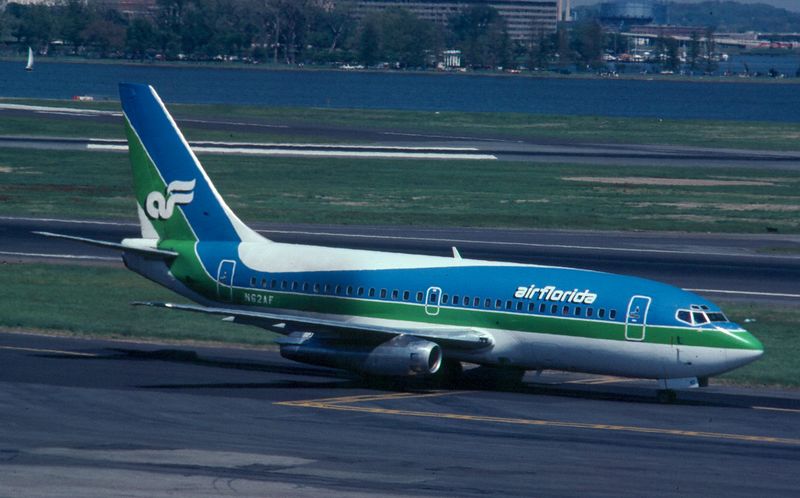
Background
Air Florida Flight 90 was scheduled to depart Washington National Airport at 14:15 EST for Fort Lauderdale International Airport, with an intermediate stop in Tampa. The aircraft arrived as Flight 95 from Miami at 13:29. Due to snowfall, the airport closed for snow removal from 13:38 to 14:53.
Pre-departure and Deicing
At about 14:20, maintenance personnel began deicing the left side of the fuselage with Type II deicing fluid, as the captain wanted to start just before the airport was scheduled to reopen at 14:30. After applying fluid to about 10 feet of the fuselage, the captain terminated the operation when it became clear the airport would not reopen at that time. Between 14:45 and 14:50, the captain requested resumption of deicing. The left side was deiced first. No covers or plugs were installed over the engines or airframe openings during deicing.
At 15:15, the aircraft was closed up and the jetway retracted. Pushback clearance was received at 15:23. A combination of ice, snow, and glycol on the ramp, along with a slight incline, prevented the tug (not equipped with chains) from moving the aircraft. The flight crew then used reverse thrust in an attempt to move, contrary to flight manual guidance, which blew snow that might have adhered to the aircraft. This did not help, so a replacement tug was used, and pushback was completed at 15:35.
Taxi and Takeoff
The aircraft taxied to runway 36 at 15:38. Although contrary to flight manual guidance, the crew intentionally positioned the aircraft near the exhaust of a New York Air DC-9 ahead in line, possibly contributing to ice adherence on the wing leading edges and blocking of the engine’s Pt2 probes. At 15:57:42, after the New York Air aircraft was cleared for takeoff, the crew accomplished the pre-takeoff checklist, including verification of the takeoff EPR setting of 2.04 and airspeed bug settings. Takeoff clearance was received at 15:58. The first officer expressed concern that something was 'not right' to the captain four times during the takeoff, but the captain did not reject the takeoff. The aircraft accelerated at a lower-than-normal rate, requiring 45 seconds and nearly 5,400 feet of runway (15 seconds and nearly 2,000 feet more than normal) to reach lift-off speed.
Climb and Impact
After lift-off, the aircraft initially climbed but failed to accelerate. The stall warning stick shaker activated almost immediately and continued until impact. The aircraft experienced stall buffet and descended at a high angle of attack. At about 16:01, it struck the heavily congested northbound span of the 14th Street Bridge and plunged into the ice-covered Potomac River. The aircraft came to rest on the west end of the bridge, 0.75 nautical miles from the departure end of runway 36. It struck six occupied automobiles and a boom truck, tearing away a 41-foot section of the bridge wall and 97 feet of the bridge railings. Four persons in vehicles on the bridge were killed; four were injured, one seriously.