Incident Overview
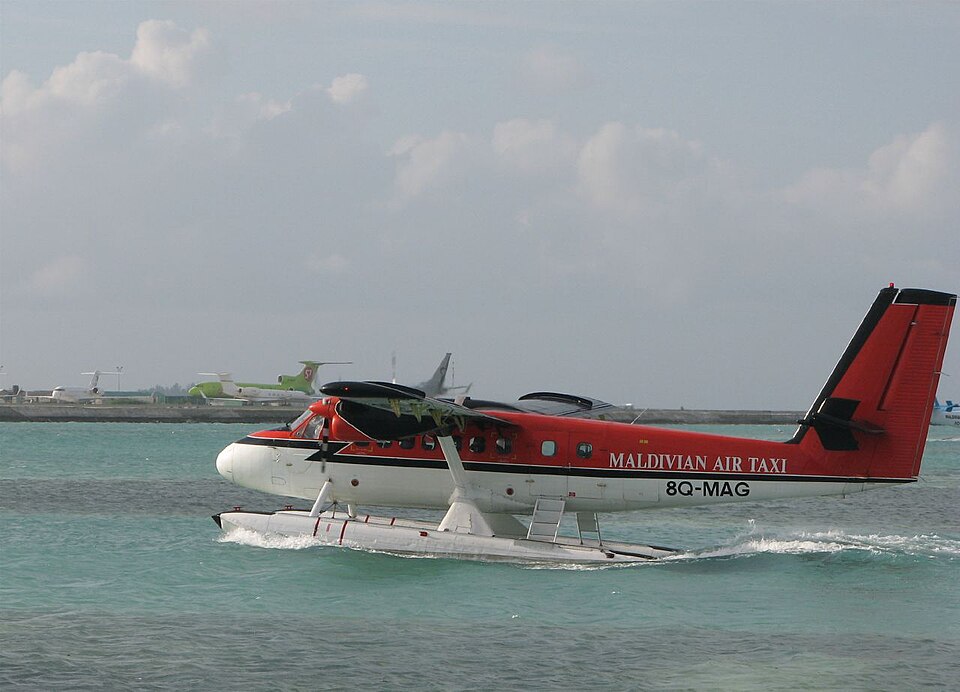
On the day of the accident, a floatplane (registration 8Q-MAG) departed at 0945 hours from a floating platform fixed to a jetty at Halaveli, North Ari Atoll. The aircraft carried three crew and four passengers for a Photo Flight around the Lagoon of Halaveli. Weather conditions were clear with good visibility and westerly winds at 8–10 knots. Estimated flight time was 40 minutes.
Flight Sequence
The aircraft took off westbound. After leveling, the co-pilot vacated his seat and gave it to a cameraman, one of the passengers. The co-pilot then moved to the third row left seat and remained there for the remainder of the flight. According to crew and passengers, the aircraft performed several right-banked orbits around the island at the initial level height, then descended to lower altitudes for additional orbits over the lagoon for photography.
Final Maneuver
The passenger seated in the cabin, wearing a headset, informed the Pilot-in-Command (PIC) that they had obtained all desired shots and that he could land. The PIC initiated a descending right-banked turn while keeping the passenger in the co-pilot seat to provide a different view. Before completing the turn, the right wing and/or float contacted the water.
Damage and Rescue
The accident resulted in both wings breaking at the root. The left float detached, and the right float became trapped between the engine and fuselage, blocking the co-pilot exit. The empennage twisted upside down. The lagoon depth at the wreckage site was approximately one meter. All passengers and crew escaped the aircraft without any fatalities.
Probable Cause
According to the official investigation: The PIC was conducting flying activities (photographic activities) at altitudes lower than permitted by regulations, the company operations manual, and standard operating procedures. At the time of the accident, a passenger occupied the co-pilot seat. The PIC could not make a fair judgment of the aircraft altitude by looking outside due to the right bank and the passenger occupying the co-pilot seat. Additionally, the crew acted swiftly to save lives after the aircraft came to a halt. The investigation noted severe damage to the right float forward and both wingtips, and the right wing and/or float were the first to impact the water, consistent with a right bank.