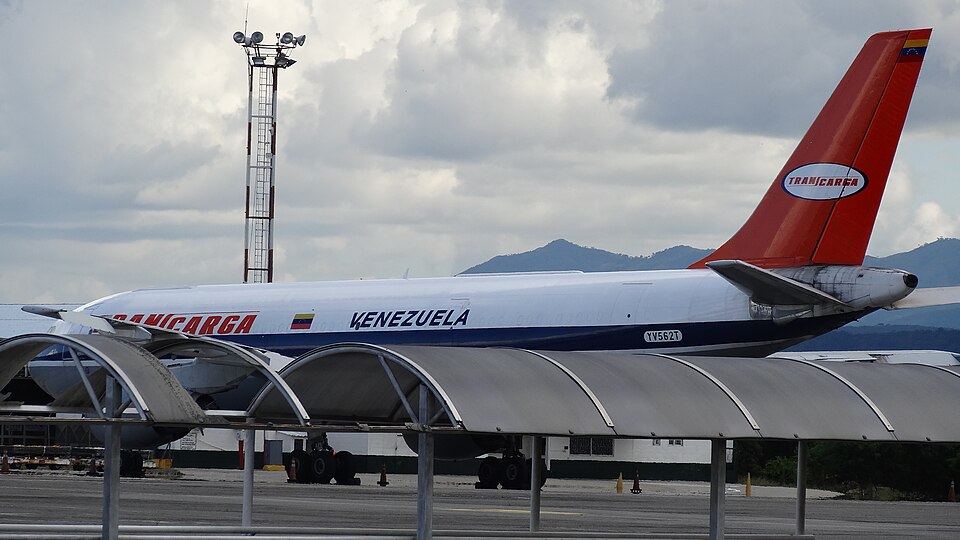
On August 21, 2021, an Airbus Industrie A300‐B4‐203F (registration YV562T) operated by Transcarga Intl Airways, C.A (TIACA). was involved in an aviation accident near En fase de ascenso (SVMI – SKBO), VE. Investigators recorded the probable cause as: Failure of the pilot's, co-pilot's, and standby attitude indicator instruments, requiring replacement of the gyroscopic units. This summary draws on records from the Venezuelan Civil Aviation Accident Investigation Board (JIAAC Venezuela).
On August 21, 2021, an Airbus A300-B4-203F (YV562T) experienced attitude indicator failures during climb from Maiquetía. The crew returned to the airport, landing safely with no injuries or damage.
Incident Overview and Flight Details On August 21, 2021, at 23:30 UTC, an Airbus Industrie A300-B4-203F cargo aircraft, registration YV562T, serial number 274, operated by Transcarga Intl. Airways C.A., began its takeoff roll from Simón Bolívar International Airport (SVMI) in Maiquetía, Venezuela. The flight was planned for El Dorado International Airport (SKBO) in Bogotá, Colombia, with an estimated en-route time of 1 hour and 16 minutes. The aircraft carried 55,800 pounds of fuel and a crew of three: a pilot, a co-pilot, and a flight engineer. ## In-Flight Instrumentation Anomaly During the climb to flight level 170 at 23:41 UTC, the crew observed warning lights for an Attitude and Direction (ATT) failure on both Attitude Director Indicator (ADI) instruments. A 5-degree discrepancy in pitch was noted between the captain's and first officer's instruments. The captain, reporting adverse weather on the route, requested a direct route to the KIKAS position, 35 nautical miles from SVMI. As the aircraft began the turn, Flight Director flags appeared on both ADIs, and the autopilot automatically disconnected. A 10-degree bank discrepancy was then observed between the two ADIs. ## Crew Response and Return to Origin The crew initiated failure correction procedures according to the Quick Reference Handbook (QRH). Cross-checking instruments using the Attitude Switching knob did not yield satisfactory results. The aircraft was subsequently flown using the Standby Horizon (HSB) and visual references, though discrepancies were noted between the terrain and instrument indications. The captain decided to return to the departure airport and requested radar vectors from the Maiquetía Area Control Center. Instrument functionality was restored during the descent. The aircraft landed safely at 00:57 UTC with no further incidents. All three crew members were unharmed, and the aircraft sustained no damage. ## Aircraft and Maintenance Background The A300-B4-203F is a commercial cargo transport aircraft with a maximum takeoff weight of 313,056 kg and a wingspan of 44.85 m. It is powered by two General Electric CF6-50C2 turbofan engines. At the time of the incident, the aircraft was airworthy under a valid certificate of airworthiness (Control No. 012919). The last preventive and scheduled maintenance was performed by OMAC-N 331: Airport Shuttle RDN 3510, C.A., at Simón Bolívar International Airport. ## Crew Qualifications The pilot in command, aged 64, held a valid air transport pilot license and instrument rating, with 1,911 hours as pilot in command on the A30B and 3,592 total hours. The co-pilot, aged 38, held a commercial pilot license with an instrument rating and A30B co-pilot qualification. The flight engineer held a valid mechanic license with A30B qualification and 849 hours of experience on the A30B. ## Investigation and Findings The investigation included crew interviews, collection of crew and operator documentation, and review of maintenance records from OMAC-N 331. Maintenance inspections and diagnostic procedures were conducted on the attitude indicator instruments in accordance with the maintenance manual. The investigation determined that the pilot's, co-pilot's, and standby attitude indicator instruments had failed. Per the maintenance manual, the components required replacement, and the gyroscopic units were replaced in accordance with necessary traceability orders for airworthiness. The investigation was closed following these corrective actions.
Probable cause
Failure of the pilot's, co-pilot's, and standby attitude indicator instruments, requiring replacement of the gyroscopic units.