Introduction
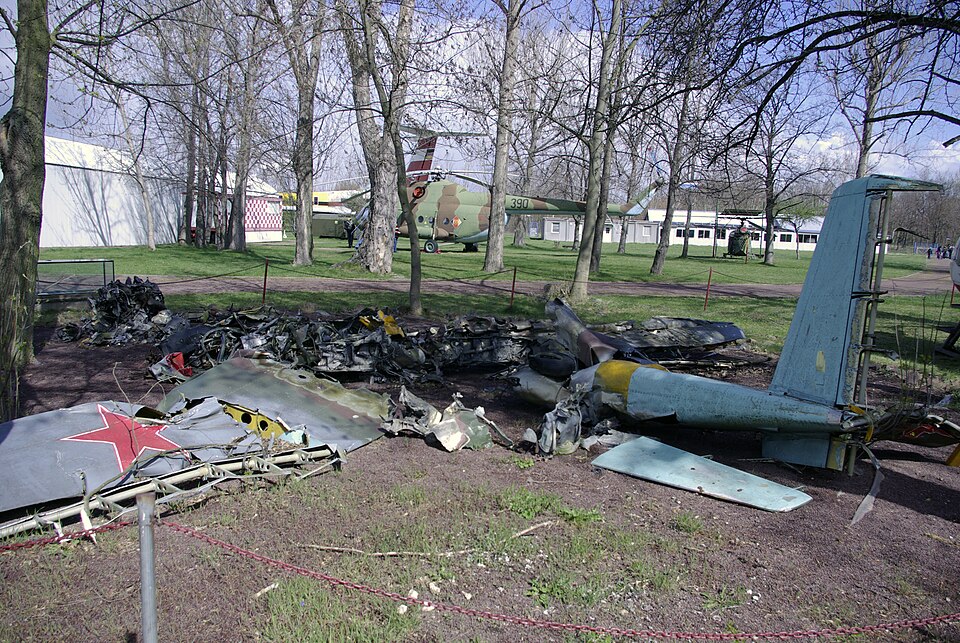
On 12 June 2000, a Yakovlev (Romania) Jak-52 aircraft crashed in a wooded area between Geyer and Zwönitz, Germany. The accident occurred during a passenger aerobatic flight conducted as part of an airshow. Both the pilot, aged 52, and the passenger, aged 27, were fatally injured. The aircraft was destroyed by impact and subsequent fire.
Flight History
The aircraft departed from Chemnitz-Jahnsdorf airfield at 15:37 local time (MESZ) for an aerobatic flight with one passenger. It proceeded to the designated aerobatics area near Zwönitz-Geyer, approximately 13 km south-southeast of the departure point. Witnesses observed several aerobatic maneuvers, including loops and spins. Around 15:50, the aircraft was seen at relatively low altitude rotating about its longitudinal axis. Shortly thereafter, an impact sound was heard and a smoke cloud was seen. The aircraft struck the ground at an angle of approximately 70° without bank and caught fire.
Investigation
The investigation was hampered by the high degree of destruction and the loss of onboard documents. No radar or radio communication recordings were available. The aircraft, manufactured in 1982 in Romania, was registered in Lithuania and operated by a German holder. It had undergone a major overhaul at approximately 750 total flight hours, and its last annual inspection was documented on 5 May 2000. No pre-impact technical malfunctions were found. The flight controls were functional, with the rear control stick removed for passenger flights.
The pilot held a valid German private pilot license with aerobatic endorsement. His total flight experience could not be precisely determined; documented records showed 201:54 hours as of 5 February 2000, while witnesses reported over 400 hours. He had flown eight flights since 9 June, including six passenger aerobatic flights, with no reported issues. The pilot had consumed a small amount of alcohol the previous evening but went to bed before 01:00; toxicology tests showed no alcohol at time of death. The passenger had a blood alcohol level of 0.29‰, considered not impairing. Both occupants were wearing seat belts; the passenger was found outside the aircraft with the buckle partially open, possibly due to rescue attempts.
Weather conditions were visual flight rules (VFR) with wind from 300-360° at 4-6 knots, visibility over 10 km, and scattered clouds at 3500 feet. The airshow permit required a minimum altitude of 450 m above ground for passenger aerobatic flights and that pilots have at least 250 total flight hours, including 100 on type. The pilot was listed with 550 hours in the permit application, but this conflicted with other records.
Conclusion
Witnesses reported that after a brief pause, the aircraft flew westward toward rising terrain, with the sun in the pilot's face. A roll to the right was initiated, and at approximately 90° of bank, the aircraft entered an uncontrolled flight attitude from which it could not recover due to low altitude. The investigation determined that the accident occurred because the aircraft entered an uncontrolled flight attitude for reasons that could not be determined, and due to low altitude, the pilot was unable to recover. Possible contributing factors such as sun glare or unintentional passenger control interference could not be confirmed or ruled out.