What happened
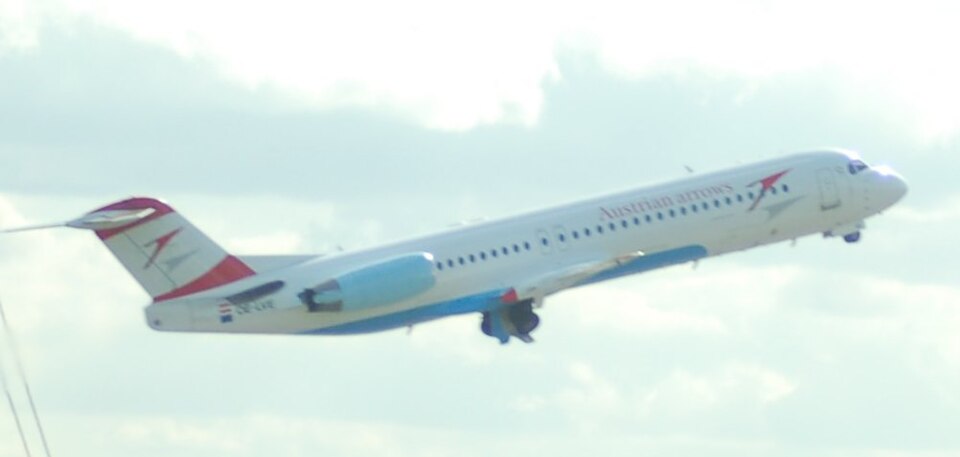
On November 6, 2016, at approximately 21:30 LT, an Austrian Airlines Fokker F100, registration OE-LVE, was operating flight OS769 from Vienna to Pristina. While cruising at FL350 over the airspace between Bosnia and Herzegovina and Serbia, the crew experienced sudden airframe vibrations and unusual noises.
Following these vibrations, the aircraft experienced indications of high vibration in engine number 1, which subsequently led to an engine failure indication (Eng Fail 1). The crew executed the engine shutdown procedure and continued the flight on a single engine. The crew declared a 'Mayday' and requested priority landing at Belgrade Nikola Tesla Airport. During the approach and landing, passengers in the rear left section of the cabin observed sparks and flashes originating from the direction of engine number 1. The aircraft landed safely, and all passengers and crew evacuated the aircraft without injury.
The investigation
The investigation focused on the damage sustained by engine number 1, a Rolls-Royce TAY 650-15. Physical inspection revealed that a fan blade (internal number 17) had fractured. Fragments from this broken blade had traveled through the engine, causing damage to the low-pressure turbine stator blades and internal damage to the engine nacelle liner due to uncontrolled vibrations.
Technical analyses, conducted in collaboration with Rolls-Royce, determined that the fracture originated from a fatigue crack at the blade root. The investigation established that the failure was linked to the application of Dry Film Lubricant (DFL). While DFL is used to reduce friction, the investigation found that the operator's line maintenance had been applying the lubricant much more frequently and in varying thicknesses than recommended. Specifically, the engine in question had received at least 34 applications of DFL, whereas the recommended limit is fewer than 10 applications per set of blades.
Findings
- The immediate cause of the serious incident was the fracture of fan blade number 17 in engine number 1.
- The indirect cause was the excessive application of DFL lubricant, which reduced friction between the blade root and the disk groove. This reduction in friction allowed for axial movement and increased axial loading, leading to the loss of the blade's retainer and subsequent uncontrolled vibrations.
- Line maintenance personnel had implemented a procedure to apply DFL more frequently as a preventive measure during winter, without consulting the engine manufacturer.
- The number of DFL applications on the affected engine significantly exceeded the manufacturer's guidelines.
- There were no contributing factors related to weather, foreign object damage, or bird strikes.