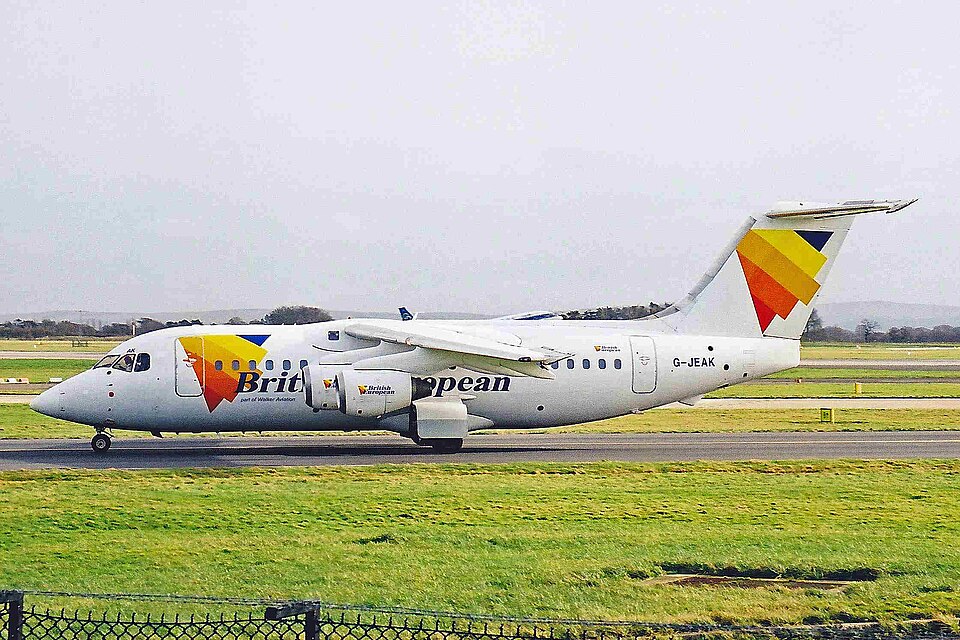
Incident Summary
The aircraft involved was a BAe 146 with registration G-JEAK. The incident occurred during descent into Birmingham Airport on 5 November 2000. The Air Accidents Investigation Branch (AAIB) conducted an investigation and published their findings in Aircraft Accident Report 1/2004 on 20 February 2004.
Report Structure
The report includes the following sections: Synopsis, Factual Information (covering history of the flight, injuries to persons, damage to aircraft, other damage, personnel information, aircraft information, meteorological information, aids to navigation, communications, aerodrome information, flight recorders, aircraft examination, medical and pathological information, fire, survival aspects, tests and research, organisational and management information, additional information), Analysis, and Conclusions.
Tests and Research
The report details tests and research conducted by Swedish testing, BAE Systems, the CAA, and references NTSB Special Investigation PB84-917006.
Additional Incidents
The additional information section covers other UK BAe 146 incidents (G-JEBD on 9 November 2000, G-JEAM on 23 November 2000, G-JEAK on 18 April 2001, G-JEAY on 14 June 2002), international BAe 146 incidents (VH-NJF, VH-NJA, VH-JJU, VH-NJR), an incident to BAe 146 SE-DRE on 12 November 1999, Boeing 757 cabin air contamination incidents, a Boeing 737 incident, and Fokker F100 incidents.
Analysis
The analysis section examines the flight, technical investigation, and cabin air quality, including sources of contamination, effect on crew members, and donning of oxygen masks.
The report concludes with findings.