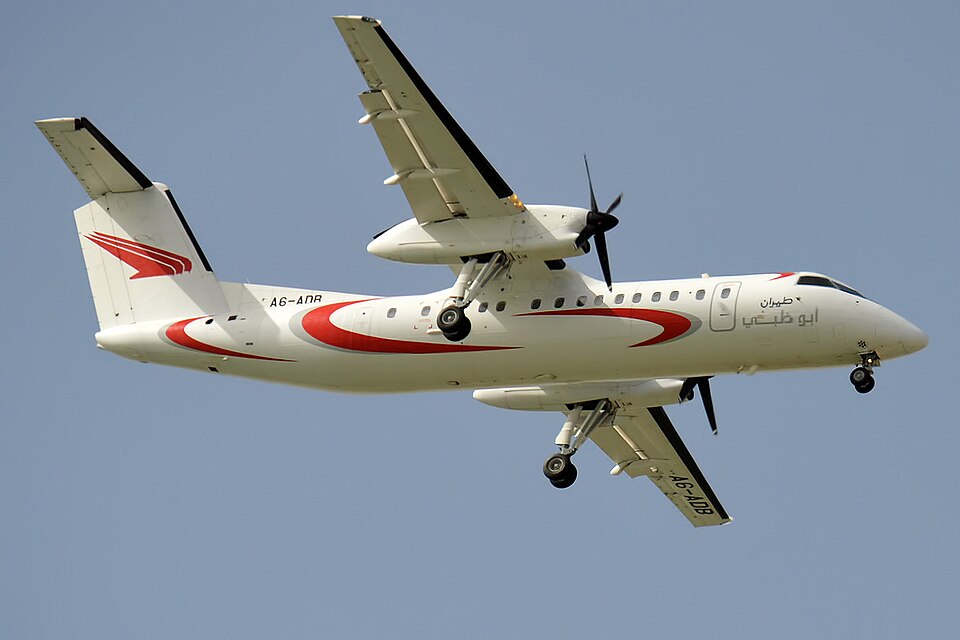
Incident Overview
On 09 September 2012 at 0649 local time, a Bombardier DHC-8-315Q aircraft, registration A6-ADB, operated by Abu Dhabi Aviation, departed from Abu Dhabi International Airport (OMAA) on a scheduled passenger flight to Das Island Airport (OMAS). At approximately 5000 feet, the flight crew declared a PAN PAN emergency due to a passenger observation and confirmation by the first officer of an internal compartment fire and overheat, indicated by paint blistering on the inboard nacelle of the #2 engine. No cockpit warnings activated, and all engine indications remained normal. The crew performed an uneventful landing back at OMAA. Upon exiting the runway, the #2 engine was shut down; after fire services confirmed no fire, the aircraft taxied to the parking stand on #1 engine power. Passengers and crew disembarked normally. During post-flight debriefing, the crew was informed that the same observation existed on the #1 engine.
Aircraft and Crew
The aircraft was a Bombardier DHC-8-315Q, registered as A6-ADB, owned and operated by Abu Dhabi Aviation. It was one of three aircraft contracted to an oil company for transporting passengers to Das Island. The crew consisted of two pilots and one flight attendant. The flight was the first of the day for both the crew and the aircraft. The aircraft's previous flight was on 08 September 2012, with minor maintenance performed.
Injuries and Damage
The source reports no injuries to passengers or crew. The aircraft was grounded pending further inspections. No details of specific damage beyond the observed paint blistering are provided in this preliminary report.
Investigation
The UAE General Civil Aviation Authority Air Accident Investigation Sector (GCAA AAIS) was notified and dispatched an investigator. The incident was classified as a serious incident under ICAO Annex 13. An investigation team was assigned. Canada, as the State of Manufacturer, was notified and appointed an Accredited Representative. The investigation is ongoing; no probable cause has been determined.