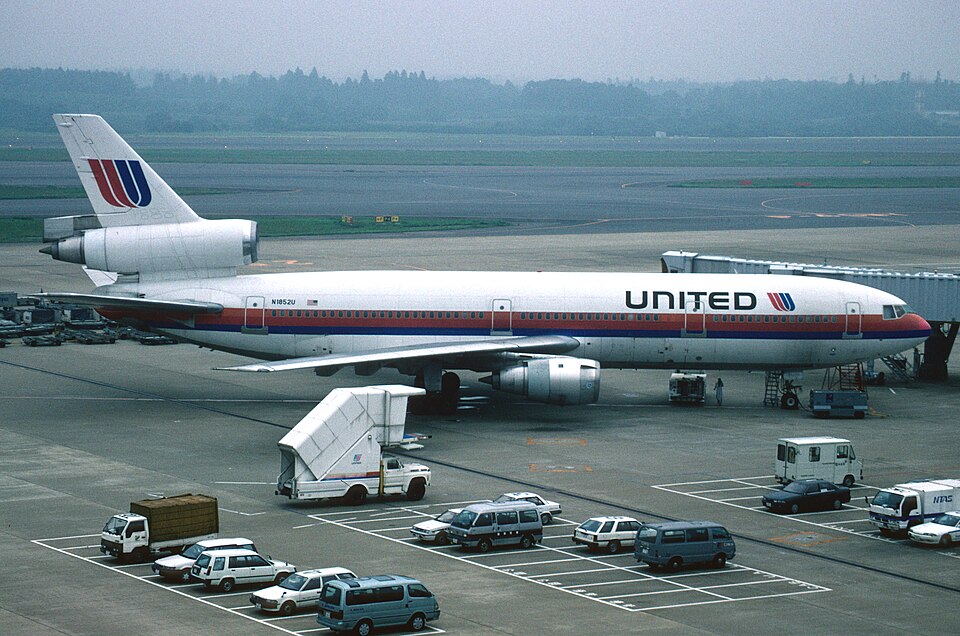
Engine Failure Due to Unauthorized Maintenance on United Airlines Aircraft

Casualties unknown • Chicago, IL, US

A United Airlines jet experienced a right-engine failure shortly after takeoff due to turbine blade detachment caused by improperly reworked saddle bolts, leading to an uneventful return landing.

What happened

Shortly after departing the airport, the flight crew detected an abnormal noise originating from the right side of the aircraft that resembled an engine compressor stall. In response, the crew shut down the number three engine and executed a safe, uneventful landing back at the departure airport. During the flight, pieces of cowling from the failed right engine detached and fell into a nearby residential area; however, no property damage or injuries were reported.

The investigation

A teardown of the affected engine revealed that turbine blades on the first stage low pressure turbine wheel had fractured and broken off. These fragments penetrated both the engine case and the core cowl doors. Further mechanical analysis determined that two stud bolts, known as saddle bolts, had pulled out from strut bosses 2 and 3 in the turbine mid frame. This failure placed excessive additional load on the remaining saddle bolts at strut bosses 1 and 4.

Eventually, these remaining bolts also pulled loose, allowing the nozzle support flange to shift rearward. This displacement permitted the nozzle segments to come into contact with the low pressure turbine, resulting in the catastrophic failure. Investigation findings indicated that unauthorized rework had been performed on the saddle bolts prior to the aircraft's acquisition by United Airline from another carrier, Laker Airways.

Findings

The root cause of the incident was traced to mechanical fatigue and subsequent failure of critical engine components. The initial loss of two saddle bolts compromised the structural integrity of the turbine mid frame. This led to a chain reaction where the remaining fasteners failed under increased stress, causing misalignment of the nozzle support flange. The resulting contact between stationary nozzle segments and rotating turbine blades caused the blade fractures. Evidence confirmed that improper maintenance procedures during previous ownership contributed directly to the component failure.

Probable cause

The failure of the low pressure turbine blades due to contact with nozzle segments, which resulted from the rearward shift of the nozzle support flange caused by the pullout of saddle bolts in the turbine mid frame. The condition was attributed to unauthorized rework performed on the saddle bolts prior to the aircraft's purchase by United Airline.

Frequently asked questions

What happened in the 1984-10-27 Mcdonnell Douglas DC-10-30 accident near Chicago, IL?

A United Airlines jet experienced a right-engine failure shortly after takeoff due to turbine blade detachment caused by improperly reworked saddle bolts, leading to an uneventful return landing.

What aircraft was involved and where did it happen?

The accident on 1984-10-27 involved a Mcdonnell Douglas DC-10-30, registration N1852U, at Chicago, IL.

What was the probable cause of the accident?

The failure of the low pressure turbine blades due to contact with nozzle segments, which resulted from the rearward shift of the nozzle support flange caused by the pullout of saddle bolts in the turbine mid frame. The condition was attributed to unauthorized rework performed on the saddle bolts prior to the…

Investigation report by the U.S. National Transportation Safety Board (NTSB) historical archive. Original record: https://carol.ntsb.gov/event/20001214X41301. This page is a structured re-presentation; facts and quotes are in the National Transportation Safety Board (NTSB), United States.

Loading the flight search…