Incident Overview
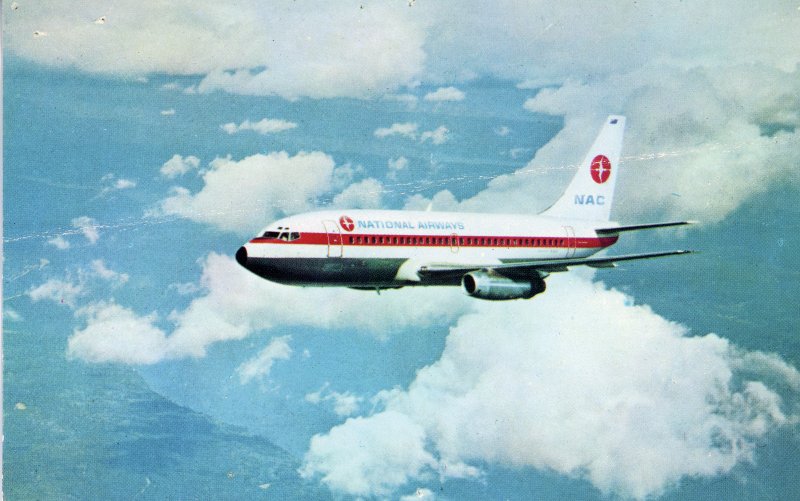
A midair collision occurred approximately 38 miles southeast of Nashville Metropolitan Airport involving a Boeing 737, operating as Piedmont Flight 488, and a formation of four F-4 aircraft with the call sign Peach 41.
Flight Paths
Piedmont Flight 488 was inbound to Nashville on an IFR clearance and was descending through approximately 12,000 feet. Memphis ARTCC had cleared the flight to descend to 6,000 feet. Peach 41 had just completed a low-level, high-speed flight on military training route VR-1051. The first element of F-4s (#1 and #2) began a left climbing turn to allow the trailing element (#3 and #4) to join formation, and called ARTCC for an IFR clearance.
Air Traffic Control Communication
ARTCC instructed Peach 41 to maintain VFR and advised both flights of each other's position. Flight 488 had seen the F-4s and was cleared to deviate to the left. The leader of Peach 41 obtained radar contact with Flight 488 and climbed above 13,000 feet. The second element of F-4s saw Flight 488 and remained low to pass under the airliner.
Actions of Flight 488
The crew of Flight 488 did not take evasive action. They reported that 'no room existed for us to maneuver out of their flight path.'