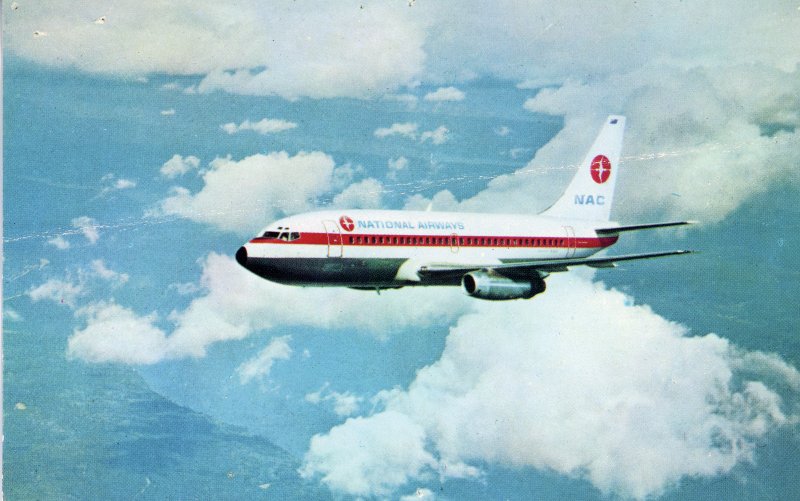
Incident Overview
A near collision occurred between Piedmont Flight PI255, a Boeing 737 (registration N749N), and a Piper PA-30 Twin Comanche (registration N7399Y) while both aircraft were operating in visual conditions over Lansing, Michigan. The two aircraft converged and passed within a reported 50 to 100 feet of each other. Neither crew saw the other aircraft during the event.
Aircraft and Flight Details
Flight PI255 was descending on an IFR clearance, while the PA-30 was cruising westbound at 8,500 feet. The Piedmont aircraft was descending to 7,000 feet at the time of the near miss. The PA-30 was not on a flight plan and was not in radio contact with air traffic control. A third aircraft, a Beech E33, was also present in the vicinity at 6,500 feet, receiving VFR advisories from Lansing Approach Control.
Air Traffic Control and Radar Coverage
Lansing Approach Control had advised Flight PI255 of the Beech E33, identified as VFR traffic. However, the controller was not aware of the PA-30. The radar return of the PA-30 was blocked by an overlap with the Beech E33, which was approximately 2,000 feet below the PA-30. All three aircraft were equipped with transponders having altitude reporting capability and were squawking either an assigned or appropriate code supplemented by altitude reply.
Transponder and Communication Status
The PA-30, despite being equipped with a transponder and altitude reporting, was not in communication with ATC. The Beech E33 pilot was receiving VFR traffic advisories. Both the Boeing 737 and the PA-30 transmitted transponder codes with altitude information, but the controller did not detect the PA-30 due to the radar return being masked by the Beech E33.