Casualties unknown

FedEx Cargo Flight Experiences Tail Strike on Landing at Los Angeles International (N68056)

Los Angeles, CA, US

On April 18, 1990, a Mcdonnell Douglas DC-10-10F (registration N68056) was involved in an aviation accident near Los Angeles, CA. Investigators recorded the probable cause as: The pilot failed to maintain a stabilized approach and did not apply sufficient elevator control back pressure after touchdown to prevent the tail strike. This summary draws on records from the U.S. National Transportation Safety Board (NTSB) historical archive.

Sourcesthe U.S. National Transportation Safety Board (NTSB) historical archivePrimary reportUpdated 2026-06-10Data APIEditorial standards
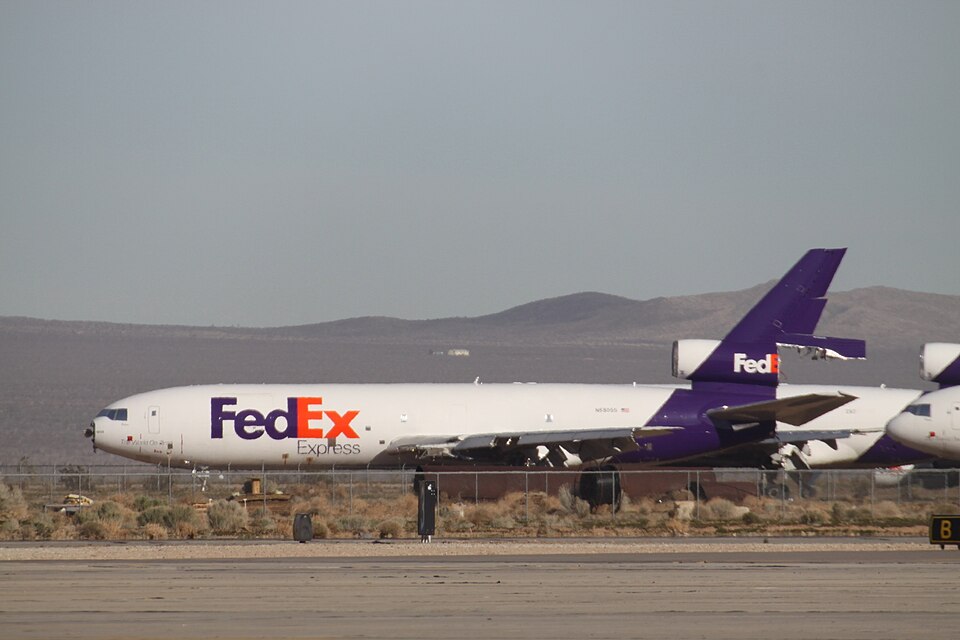
Aircraft registered N68056
Aircraft registered N68056. Photo: Aeroprints.com / CC BY-SA 3.0, via Wikimedia Commons

A Federal Express cargo flight sustained a tail strike during landing at Los Angeles International Airport after the airspeed decayed below the intended touchdown speed and the pitch attitude increased excessively.

Approach and Landing Sequence

A regularly scheduled Federal Express (FedEx) domestic cargo flight arrived over Los Angeles from Memphis. The captain conducted a prelanding briefing for a visual approach to runway 07L at Los Angeles International Airport (LAX). The briefing included setting Vref speeds in accordance with company flight operations policy. The computed Vref speed for landing was 143 knots; the intended touchdown speed was 138 knots.

The pilot failed to maintain a stabilized approach. The airspeed decreased to 138 knots indicated airspeed (KIAS) when crossing over the threshold. From that point, the airspeed continued to decelerate, reaching 122.3 knots at touchdown with a pitch attitude of 11.1 degrees.

Tail Strike Occurrence

At touchdown, the pitch attitude continued to increase until a tail strike occurred at a pitch attitude of 13.2 degrees. Digital flight data recorder (DFDR) data revealed that the captain relaxed the elevator control back pressure, but the action was not sufficient to prevent the tail strike.

Flight Manual Recommendations

The flight manual recommends that the pilot lower the nose upon touchdown to counteract the increase in pitch attitude due to ground spoiler activation.

Probable cause

The pilot failed to maintain a stabilized approach and did not apply sufficient elevator control back pressure after touchdown to prevent the tail strike.

Investigation report by the U.S. National Transportation Safety Board (NTSB) historical archive. Original record: https://carol.ntsb.gov/event/20001212X22938. This page is a structured re-presentation; facts and quotes are in the National Transportation Safety Board (NTSB), United States.