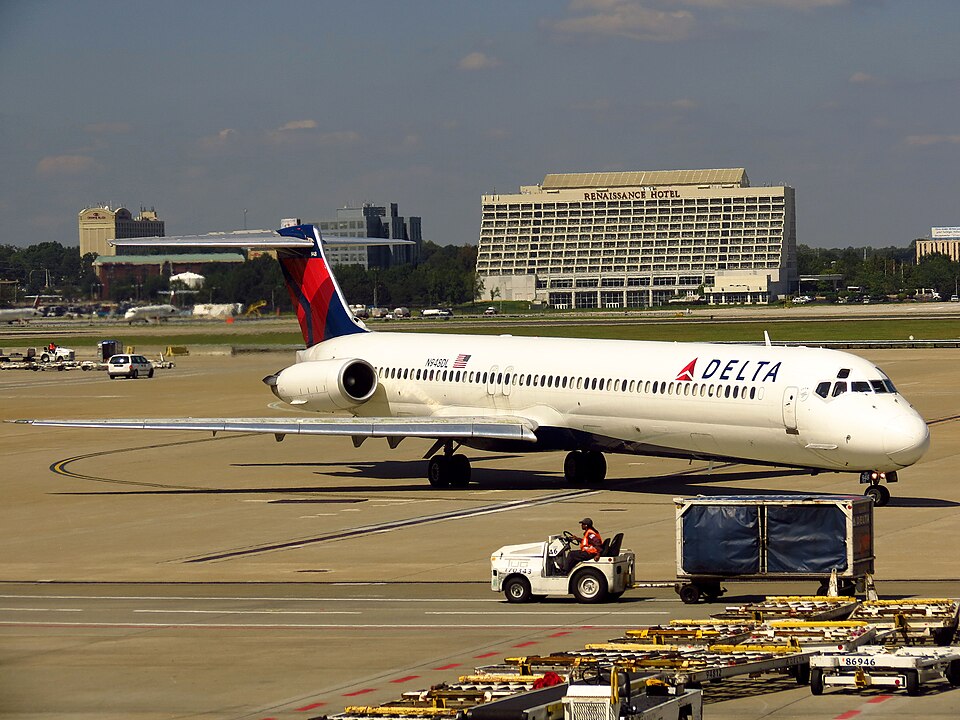
Hard Landing of MD-88 Results in Structural Damage

Casualties unknown • Charleston, SC, US

An MD-88 aircraft experienced a hard landing on the runway after approaching the touchdown point with an excessive sink rate and improper trim settings.

What happened

The MD-88 was cleared for a visual approach. Upon reaching the visual descent point, the flight crew transitioned to the Visual Approach Slope Indicator (VASI). While the pilot reported that the aircraft was stabilized during the approach, the first officer noted a higher than normal sink rate as the aircraft neared the touchdown point. Consequently, the airplane touched down hard on the runway. The pilot later stated that the aircraft touched down sooner than expected.

The investigation

An examination of the airframe identified structural damage located between fuselage stations 1338 and 1351. Data retrieved from the digital flight data recorder (DFDR) provided a comparison between this incident and the three previous landings. The readout revealed several significant deviations:

  • The nose-up stabilator trim was twice as steep as in previous landings.
  • The touchdown airspeed was 8 to 14 knots lower than usual.
  • Nose-up elevator deflection was two to three times larger.
  • The maximum pitch attitude at touchdown was two to five times higher than previous operations.

According to the MD-88 takeoff and landing booklet, the required landing airspeed for this flight should have been 133 knots.

Probable cause

The hard landing was characterized by an excessive sink rate, improper nose-up stabilator trim, and a touchdown airspeed significantly below the recommended 133 knots.

Frequently asked questions

What happened in the 1993-07-27 Mcdonnell Douglas MD-88 accident near Charleston, SC?

An MD-88 aircraft experienced a hard landing on the runway after approaching the touchdown point with an excessive sink rate and improper trim settings.

What aircraft was involved and where did it happen?

The accident on 1993-07-27 involved a Mcdonnell Douglas MD-88, registration N948DL, at Charleston, SC.

What was the probable cause of the accident?

The hard landing was characterized by an excessive sink rate, improper nose-up stabilator trim, and a touchdown airspeed significantly below the recommended 133 knots.

Investigation report by the U.S. National Transportation Safety Board (NTSB) historical archive. Original record: https://carol.ntsb.gov/event/20001211X12763. This page is a structured re-presentation; facts and quotes are in the National Transportation Safety Board (NTSB), United States.

Loading the flight search…