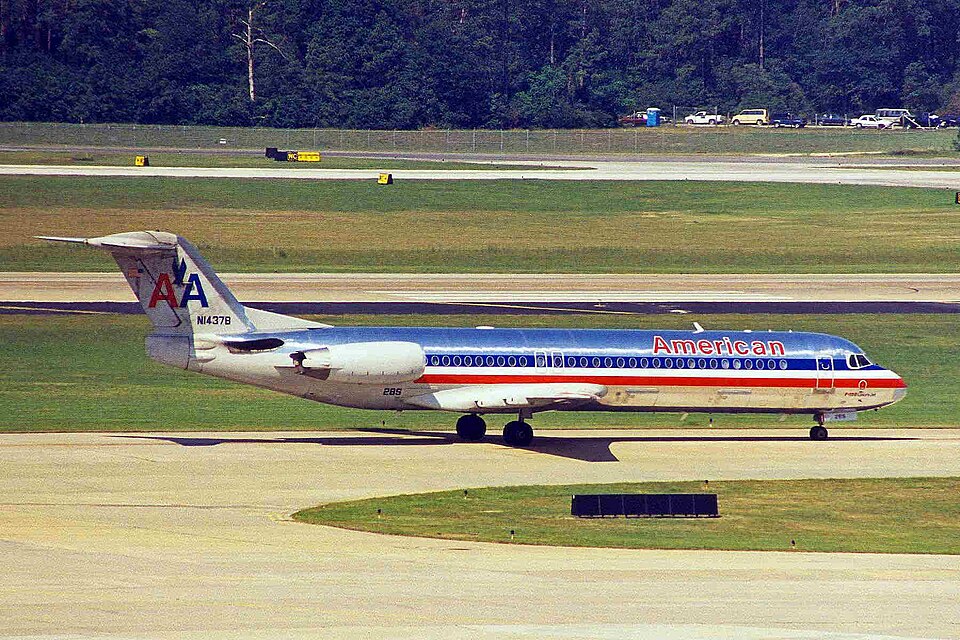
Incident
During the takeoff roll, the right main outboard wheel separated from the aircraft. The control tower informed the flight crew of the wheel departure. The crew reported that all cockpit indications were normal. The aircraft proceeded to its destination and executed a landing without further incident.
Examination
An examination of the failed wheel assembly showed that the outboard wheel bearing had failed in a manner such that the bearing cage could no longer retain the rollers. Both bolts used to lock the retainer nut to the axle were found in place. The wheel spacer was seized to the inner race of the outer bearing, and a distinct ridge was present on the damaged spacer.
The NTSB conducted a metallurgical examination of the components. This examination determined that the wheel spacer had been rotating on the axle; however, the orientation of the spacer at the time of failure could not be determined. The outboard wheel bearing exhibited evidence of overheating.
Findings
The investigation documented the physical condition of the failed bearing assembly. The bearing cage had lost its roller retention capability. The spacer was seized to the inner race, and a ridge had formed on the spacer. The NTSB metallurgical analysis confirmed rotation of the spacer on the axle and identified overheating in the outboard bearing.