Tail Strike During Unstabilized Approach and Hard Landing

Casualties unknown • Anchorage, AK, US

An aircraft experienced a hard landing and subsequent tail strike after the captain intervened during an unstabilized approach.

What happened

Flight data recorder analysis indicates that while flying at 985 feet AGL with 50 degrees of flaps selected, the first officer failed to stabilize the approach. During this phase, the aircraft's pitch attitude fluctuated by approximately 2 degrees in conjunction with changes in elevator position. As the aircraft reached an altitude of 40 to 50 feet, the pitch attitude began decreasing.

At 20 feet AGL, the captain perceived a higher than normal rate of descent and took control of the aircraft by grabbing the yoke and pulling back. This resulted in a hard landing, which caused the airplane to bounce and oscillate at least three times. During these oscillations, the aircraft reached a maximum pitch-up attitude of 12.3 degrees, and the tail struck the runway.

Findings

Investigation into the flight controls revealed that both pilots were manipulating the controls simultaneously during the attempt to recover from the bounced landing. Additionally, the captain failed to use the verbal instructions required by the flight manual and company procedures when assuming control of the aircraft.

Probable cause

The captain's failure to follow established procedures for transferring control and the simultaneous manipulation of controls by both pilots during a bounced landing recovery.

Frequently asked questions

What happened in the 1994-11-04 Mcdonnell Douglas MD-11/F accident near Anchorage, AK?

An aircraft experienced a hard landing and subsequent tail strike after the captain intervened during an unstabilized approach.

What aircraft was involved and where did it happen?

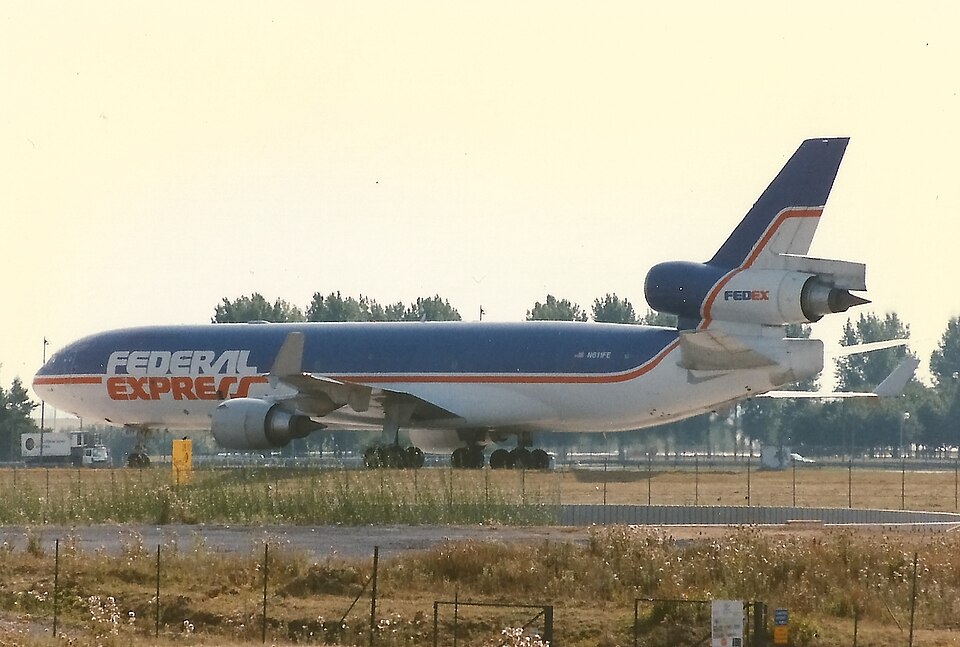
The accident on 1994-11-04 involved a Mcdonnell Douglas MD-11/F, registration N611FE, at Anchorage, AK.

What was the probable cause of the accident?

The captain's failure to follow established procedures for transferring control and the simultaneous manipulation of controls by both pilots during a bounced landing recovery.

Investigation report by the U.S. National Transportation Safety Board (NTSB) historical archive. Original record: https://carol.ntsb.gov/event/20001206X02536. This page is a structured re-presentation; facts and quotes are in the National Transportation Safety Board (NTSB), United States.

Loading the flight search…