Event Sequence
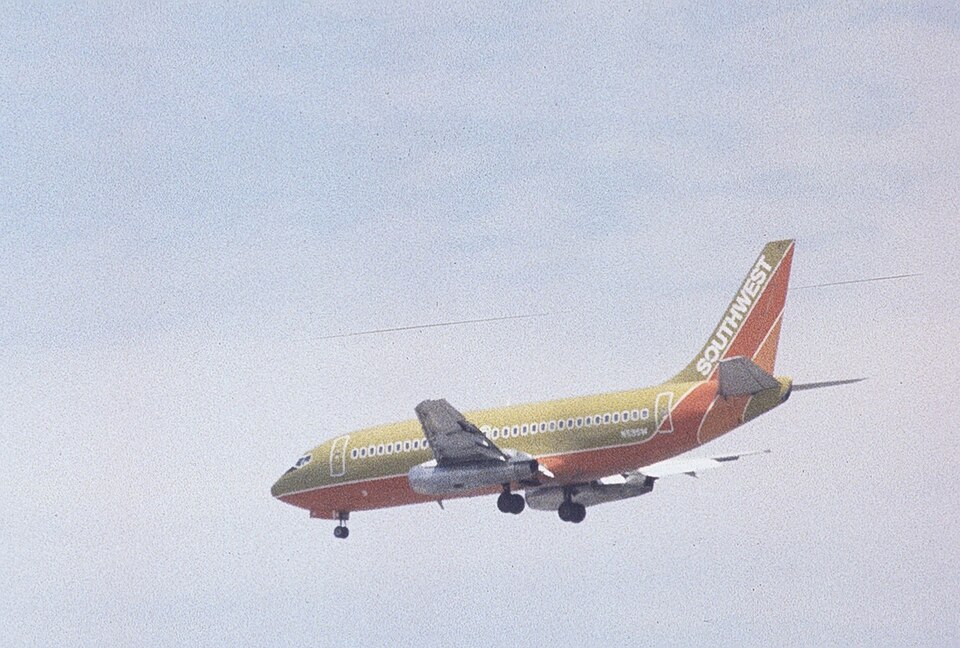
During the takeoff roll, after the first officer called V1, a bird was ingested into the left engine, resulting in a compressor stall. The captain initiated a rejected takeoff as VR was called. The airplane continued accelerating momentarily, and V1 was exceeded by 10 knots, leading to a runway overrun. After stopping on the overrun, the captain made a public address announcement instructing passengers to remain seated.
Fire and rescue personnel arrived, confirmed there was no fire, and noted that the tires were deflating and smoking due to excessive brake temperature from the rejected takeoff, which had melted the fuse plugs and deflated the tires. Evacuation slides were dearmed, and the cabin doors were opened for ventilation. A fire then erupted from the right brake and was immediately extinguished by fire personnel.
Evacuation
Hearing a fireman shout "fire," the flight attendants at the forward and aft entry doors commanded an evacuation without informing the captain that a fire had been reported, without communicating first with each other, and without determining the location of the fire. To evacuate, they closed the cabin doors, rearmed the slides, and began the evacuation. During the evacuation, one passenger was seriously injured, and four received minor injuries.
Training
The airline company did not provide joint Crew Resource Management (CRM) training to flight deck crews and flight attendants. Two of the three flight attendants stated they had not received company CRM training.