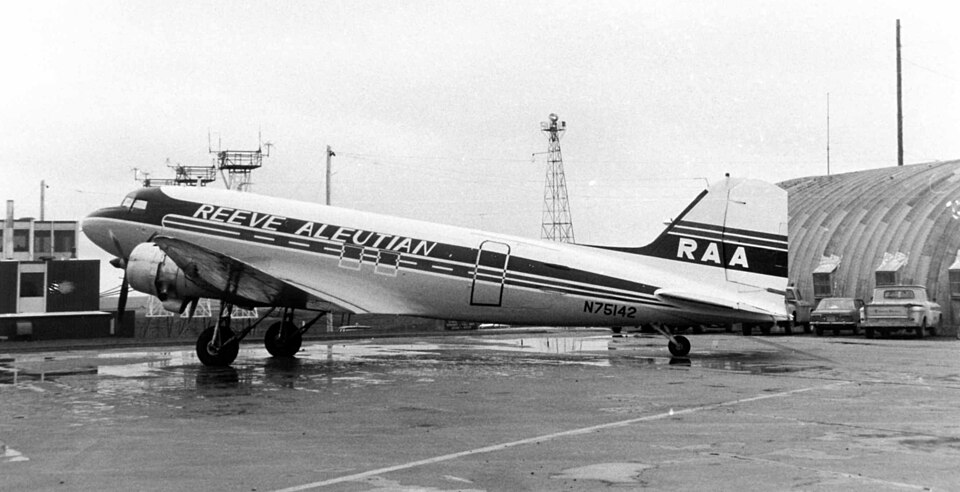
Incident Overview
A DC-3C aircraft took off from runway 10L and immediately executed a right turn, followed by a left turn back toward the airport while declaring a fire aboard. The accident occurred during dark night visual meteorological conditions. Witnesses reported observing 'flames' or an 'orange glow' emanating from the right engine.
Engine Fire Examination
A small number of aluminum fragments, identified as coming from the aft edge of the right engine accessory cowling, were found on the ground just short of the impact site. These fragments exhibited signs of heat distress but no significant melting. Examination of the right engine and accessory section revealed no evidence of a preimpact fire. Sooting and metal splatter on the leading edge of the right horizontal stabilizer were minimal. Spectral analysis of radio transmissions indicated no significant divergence in engine RPM between the two engines.
Flight Dynamics and Stall
Postcrash propeller examination determined approximate blade pitch angles of 18-19 degrees for the right propeller and 30-32 degrees for the left propeller at impact. Slash mark dimensions associated with the right propeller yielded propeller RPM estimates ranging from approximately 1750 to 2570 over a speed range of 68 to 100 knots. Approximately 10 seconds before impact, the first officer advised the pilot in command over the tower frequency, 'we're gonna stall.' The aircraft was in a left turn back toward runways 28 left and right at the time.
Impact and Postcrash Fire
The right wing struck the ground, causing the aircraft to cartwheel to a stop. A postcrash fire ensued, destroying the cockpit area and the inboard section of the right wing.