Casualties unknown

Flight Encounters Severe Clear Air Turbulence at FL350, Diverts to Reno (N746AS)

Reno, NV, US

On March 4, 1998, a Boeing 737-242C (registration N746AS) was involved in an aviation accident near Reno, NV. Investigators recorded the probable cause as: Unforecasted and sudden encounter with clear air turbulence when passengers and flight attendants were not secured in their seats. This summary draws on records from the U.S. National Transportation Safety Board (NTSB) historical archive; 2 related events involving the same aircraft type or operator are linked below.

Sourcesthe U.S. National Transportation Safety Board (NTSB) historical archivePrimary reportUpdated 2026-06-10Data APIEditorial standards
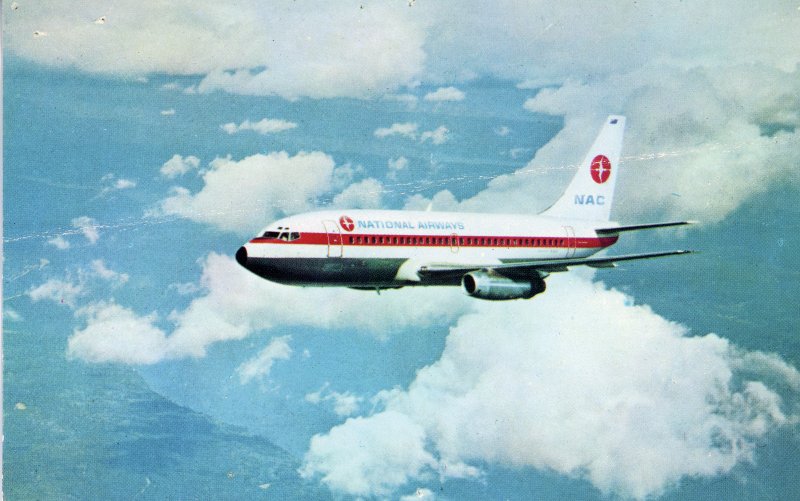
Boeing 737-242C
Photo: San Diego Air & Space Museum Archives / Public domain, via Wikimedia Commons

A flight encountered severe clear air turbulence at flight level 350, diverting to Reno. No other pilot reports or forecasts had indicated turbulence. Seat belt signs were off; FDR data showed rapid vertical acceleration changes over six seconds, with little warning to the crew.

Incident Overview

A flight experienced severe clear air turbulence while cruising at flight level 350. The event prompted a diversion to Reno, Nevada. Prior to the encounter, no other pilots had reported clear air turbulence in the area, and such conditions were not included in any forecasts. At the time of the turbulence, the seat belt signs were off.

Flight Data Recorder Analysis

Review of the flight data recorder (FDR) revealed that during the turbulent period, vertical acceleration (Nz) varied significantly over a 6-second span. The recorded values ranged from +1g to +1.5g, then dropped to -0.07g, followed by +1.3g, and finally +0.86g. This indicates rapid and severe changes in vertical motion. The FDR data also indicated that atmospheric stability existed at flight level 350 several minutes prior to the onset of turbulence, suggesting a sudden change in conditions.

Crew Warning and Communication

There was little or no warning given to the flight crew of the impending turbulent conditions. The absence of pilot reports and forecasts, combined with the sudden onset, contributed to the unexpected nature of the encounter.

Investigation report by the U.S. National Transportation Safety Board (NTSB) historical archive. Original record: https://carol.ntsb.gov/event/20001211X09708. This page is a structured re-presentation; facts and quotes are in the National Transportation Safety Board (NTSB), United States.