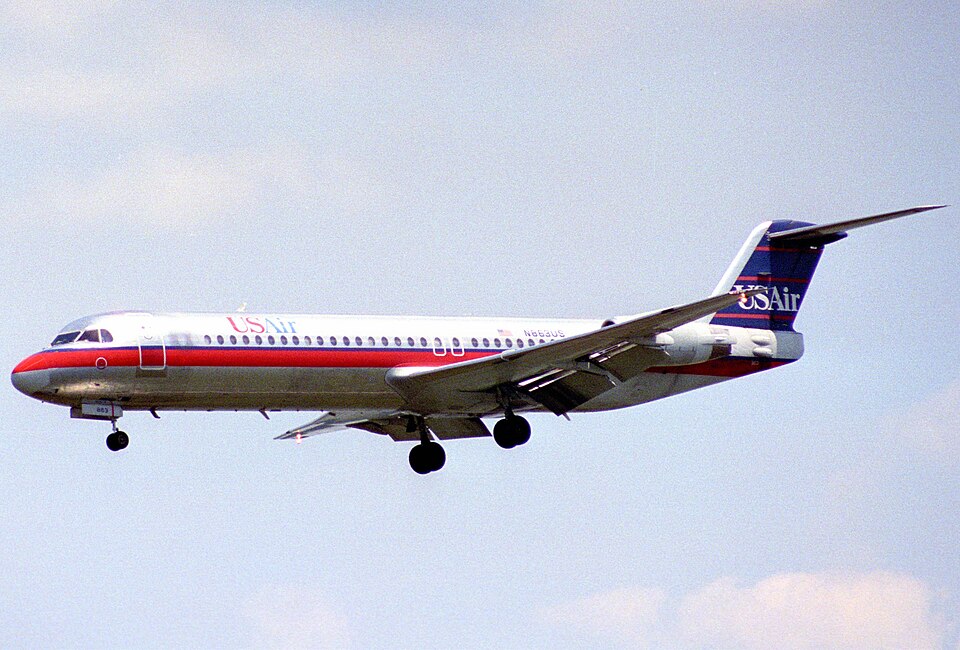
Fuel truck strikes aircraft wing tip during pushback

Casualties unknown • Philadelphia, PA, US

A fuel truck collided with the left wing tip of a US Airways Fokker F-100 at night after the aircraft's wing overhung an outer service road during pushback operations.

What happened

During a nighttime pushback operation, a Fokker F-100 was being moved from its gate when its left wing tip extended over an outer service road. While traveling eastbound on that service road, a fuel truck struck the overhanging wing tip.

The driver of the fuel truck reported observing the aircraft being pushed from the gate and noted that the ground crew appeared to be unhooking from the plane. The driver stated the road initially appeared clear, but then observed the tug swinging wide onto the service road toward his vehicle. During a brief moment when the driver diverted his attention to the tug driver, the collision occurred.

The investigation

The investigation determined that US Airways performed the two-man pushback in compliance with their established ground procedures manual. However, the company's manual did not mandate the presence of a safety person using illuminated wands at the service road during instances where part of the aircraft overhangs the roadway. Additionally, it was noted that the Fokker F-100 lacked equipment for rear side wing tip lights.

Probable cause

The collision occurred because the airline's ground procedures did not require a safety person with illuminated wands to monitor the service road when aircraft components overhung the roadway, and the aircraft was not equipped with rear side wing tip lights.

Frequently asked questions

What happened in the 1998-03-12 Fokker F-100 accident near Philadelphia, PA?

A fuel truck collided with the left wing tip of a US Airways Fokker F-100 at night after the aircraft's wing overhung an outer service road during pushback operations.

What aircraft was involved and where did it happen?

The accident on 1998-03-12 involved a Fokker F-100, registration N863US, at Philadelphia, PA.

What was the probable cause of the accident?

The collision occurred because the airline's ground procedures did not require a safety person with illuminated wands to monitor the service road when aircraft components overhung the roadway, and the aircraft was not equipped with rear side wing tip lights.

Investigation report by the U.S. National Transportation Safety Board (NTSB) historical archive. Original record: https://carol.ntsb.gov/event/20001211X09761. This page is a structured re-presentation; facts and quotes are in the National Transportation Safety Board (NTSB), United States.

Loading the flight search…