Uncontained Engine Failure During Climb

Casualties unknown • Aspen, CO, US

An aircraft experienced an uncontained failure of the number 4 engine while climbing to cruise altitude, resulting in the separation of multiple turbine blades.

What happened

During a climb to cruise altitude, the aircraft experienced an uncontained failure of the number 4 engine. The event involved the structural failure of components within the engine assembly.

The investigation

An examination of the engine revealed that the number 4 turbine disc had lost nearly all of its blades. Specifically, all blades had separated just above the blade platform, with the exception of one single blade, which separated just below the blade platform.

Maintenance records indicated that the number 4 turbine disc assembly had been installed 22.5 hours or 22 cycles before the event. While the manufacturer identified the turbine disc wheel as new, all 60 blades on the assembly had been previously used.

Investigators identified a high-cycle fatigue crack in the one blade that separated below the blade platform. Metallurgical analysis showed that this fatigue crack originated from a fretting damage mark located at the fir-tree portion of the blade.

Further investigation by the manufacturer revealed two significant mechanical issues:

  • Nine blade retention pins, intended to prevent radial movement of the blades, failed to meet the required maximum clearance of 0.005 inch between the pin head and the wheel.
  • Blade stress concentration was induced by sharp edges found in the wheel broach slots.

Probable cause

The engine failure was caused by a high-cycle fatigue crack originating from fretting damage, compounded by excessive clearance in blade retention pins and stress concentrations from sharp edges in the wheel broach slots.

Frequently asked questions

What happened in the 1999-02-12 British Aerospace BAE 146-200A accident near Aspen, CO?

An aircraft experienced an uncontained failure of the number 4 engine while climbing to cruise altitude, resulting in the separation of multiple turbine blades.

What aircraft was involved and where did it happen?

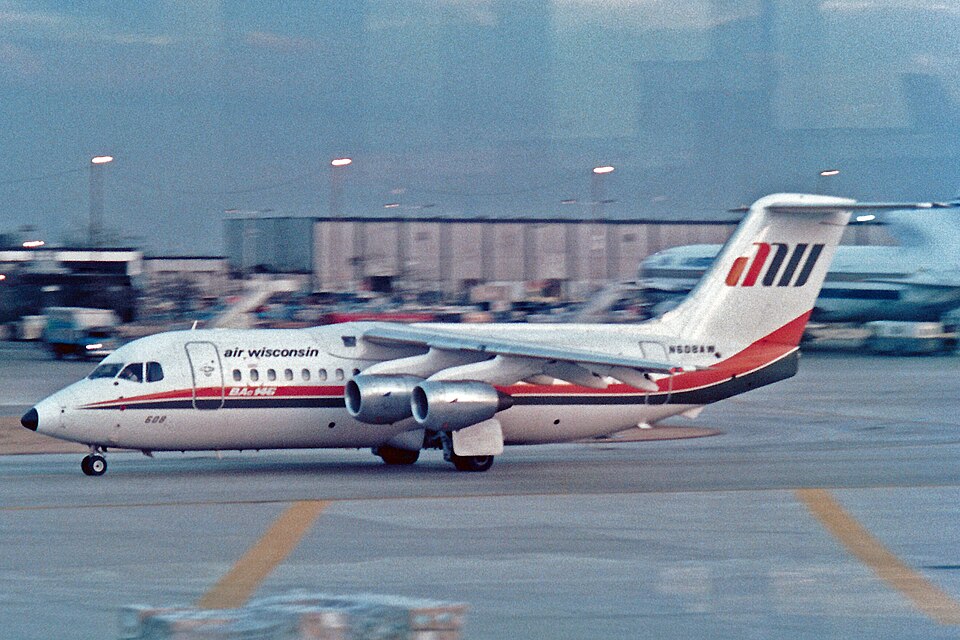
The accident on 1999-02-12 involved a British Aerospace BAE 146-200A, registration N608AW, at Aspen, CO.

What was the probable cause of the accident?

The engine failure was caused by a high-cycle fatigue crack originating from fretting damage, compounded by excessive clearance in blade retention pins and stress concentrations from sharp edges in the wheel broach slots.

Investigation report by the U.S. National Transportation Safety Board (NTSB) historical archive. Original record: https://carol.ntsb.gov/event/20001205X00147. This page is a structured re-presentation; facts and quotes are in the National Transportation Safety Board (NTSB), United States.

Loading the flight search…