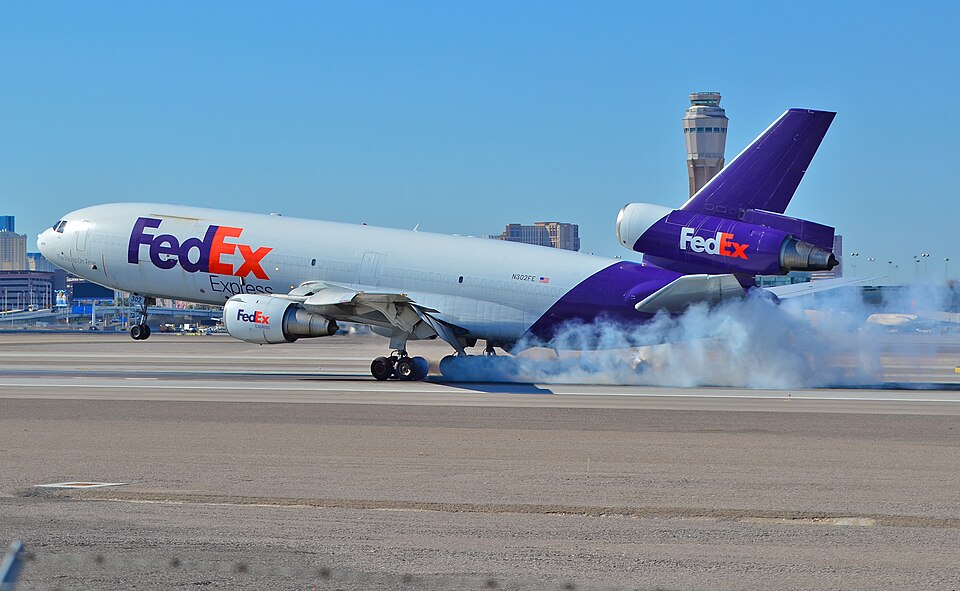
Incident Overview
During taxi preparations for departure, the APU door light illuminated on the flight deck. The aircraft returned to the loading dock, where the engines were shut down. Maintenance personnel closed and secured the APU door. Subsequently, the engines were restarted, and the aircraft began a second pushback.
Pushback Configuration
Two maintenance technicians were involved in the pushback operation. One technician was positioned off the right side of the aircraft, wearing a headset. The other technician operated the tug. After receiving clearance to push, the tug driver initiated a gradual turn to avoid nearby equipment and to minimize jet blast exposure to other gates.
Collision with Loading Dock
Approximately halfway down the ramp, the left side of the aircraft contacted the loading dock. The impact produced an 8-foot-long gash on the left fuselage, below the cockpit area.
Tug Malfunction Reports
The tug operator reported that the tug's drive mechanism was intermittently sticking in a '2-wheel' or 'crab' mode. A post-accident investigation of the tug revealed no mechanical discrepancies. However, other technicians subsequently reported experiencing the same intermittent problem with the tug. Components were removed for testing, and no anomalies were found. After those components were replaced, no further issues with the tug were reported.
Manufacturer's Statement
A representative from the tug's manufacturer stated that, regardless of the system status, the operator would always have had front wheel steering and braking capability.
Investigation Findings
No official probable cause was determined from the available information.