Incident Overview
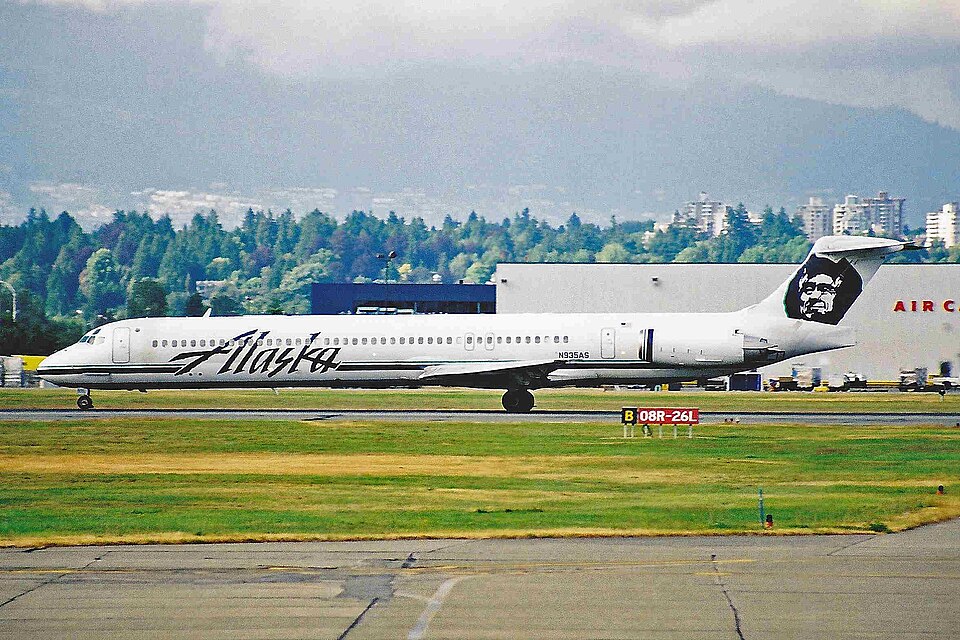
A McDonnell Douglas MD-82 crew reported a near midair collision (NMAC) with a twin-engine Piper Seneca approximately 15 miles north of the airplane's destination airport. The operation occurred in Class E airspace.
Flight Details
The captain of the MD-82 stated that during the initial portion of the approach, while descending through 4,000 feet MSL, instrument meteorological conditions (IMC) existed. Approach control then cleared the crew to descend to 3,000 feet MSL on a heading of 160 degrees and advised of traffic about 1 mile to the southwest with an indicated altitude of 2,500 feet MSL. As the crew began leveling the airplane at 3,000 feet MSL and descended below the clouds, the captain immediately observed a twin-engine airplane climbing from 2,500 feet toward their aircraft. He reported very little time to react before the twin-engine airplane passed to the left and below his airplane, approximately 500 feet horizontally and 200 feet vertically.
Controller Communication
A review of approach control records revealed that the Piper Seneca was not in contact with approach control and was not required to be while operating in Class E airspace. Air-ground radio communication tapes indicated that the controller informed the MD-82 pilot of conflicting traffic located about 1 mile southwest, moving in a northwesterly direction, with an altitude indicating 2,500 feet. Approximately 20 seconds later, the MD-82 pilot reported to the controller, in part: "...ha, that was pretty close on that traffic."
TCAS Status
The captain added that the MD-82's Traffic Alert and Collision Avoidance System (TCAS) was inoperative at the time of the incident. Consequently, no collision avoidance alert was provided to the crew.
Summary of Facts
- Aircraft involved: McDonnell Douglas MD-82 and Piper Seneca (twin-engine).
- Location: About 15 miles north of destination, Class E airspace.
- Weather: IMC during initial descent.
- TCAS: Inoperative on MD-82.
- Pilot of MD-82 reported visual contact with climbing twin-engine airplane.
- Controller provided traffic advisory.
- Piper Seneca not in contact with ATC.