Incident Overview
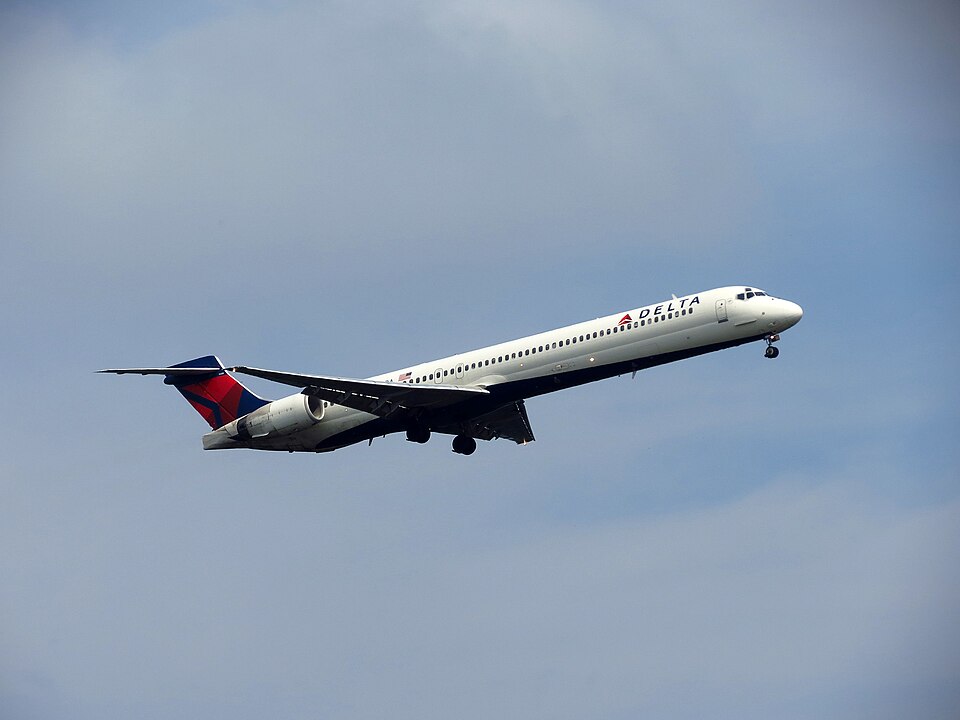
During a landing attempt on runway 34R, an MD-90 struck approach lights 400 feet short of the runway threshold. The aircraft touched down firmly but not hard, and rollout was normal. Upon reaching the gate, the captain notified the control tower that he had "possibly touched down short of the runway."
Sequence of Events
The captain's first approach briefing was based on ATIS information indicating a CAT III ILS approach to runway 16R. However, when descent instructions were received, the descent profile was for landings to the north, confirmed by a revised ATIS. The captain briefed the first officer for a second time, now for a CAT III approach to runway 34R. Improved RVR made a Category I approach feasible, and the decision was made to execute this approach.
The captain reported acquiring the approach lights 100 feet above minimums, and seeing the threshold and runway when the aircraft reached minimums. He disconnected the autopilot. As he began to flare, the first officer announced that sink rate was increasing. The captain attempted to increase pitch.
Damage and Debris
An airport operations vehicle reported observing the MD-90 land "prior to the numbers but had not touched down in the over run." Subsequent inspection revealed debris on runway 34R. The aircraft had struck the approach lights 400 feet short of the runway. Two threshold lights and one light each from the 100-foot and 200-foot approach light bars were found knocked off. The aircraft sustained damage to the left main wheel splash guard, and one tire was cut. A one-inch square piece of metal was lodged in the left engine noise suppression material, and there was some damage to the left engine first stage fan section.
Weather Conditions
At the time of the incident, ATIS Sierra was current: wind 330 degrees at 5 knots, visibility less than 1/4-mile in freezing fog, indefinite ceiling 100 feet, temperature -6°C, dew point -7°C, altimeter 30.24 inHg. Remarks indicated fog dispersal ongoing.