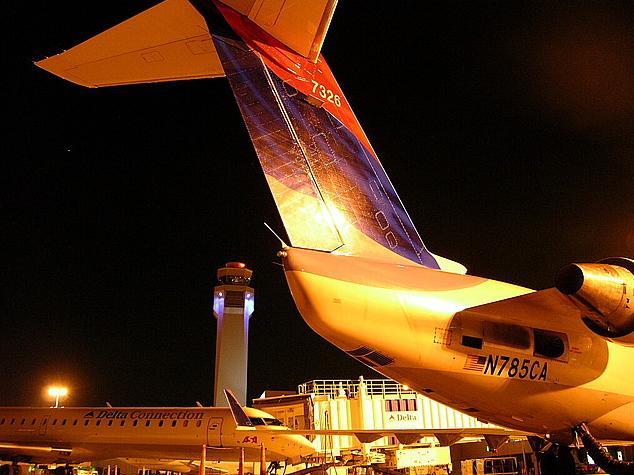
Incident Description
During a visual approach, the captain reported flying a localizer intercept to capture the glideslope. Upon selecting flaps 45, the airplane rolled approximately 15 to 20 degrees to the right. The captain applied left aileron and rudder to control the roll, and the approach was aborted.
After consulting maintenance and flight operations personnel, and conducting a visual inspection, the captain identified a failure of the right flight spoiler. A decision was made to land using corrected speeds per the appropriate checklist. The subsequent approach and landing were uneventful.
Investigation Findings
A post-flight inspection revealed that the right flight spoiler was fully deployed and its lug had fractured and separated from the hydraulic actuator. Maintenance records indicated the right flight spoiler had accumulated 3,987.9 cycles and 4,064 landings. A metallurgical examination determined that the aluminum spoiler lug had failed due to fatigue.
Regulatory Actions
In response to this failure, Transport Canada issued an Airworthiness Directive (AD) on February 22, 2001, requiring inspection of aluminum flight spoiler lugs at 3,000 cycles and at intervals not exceeding 500 cycles. The AD also stipulated that installation of redesigned flight spoilers incorporating steel lugs provided terminating action to the inspection requirements. The Federal Aviation Administration (FAA) issued a corresponding AD on July 26, 2001, mandating the same inspection criteria.