Incident Overview
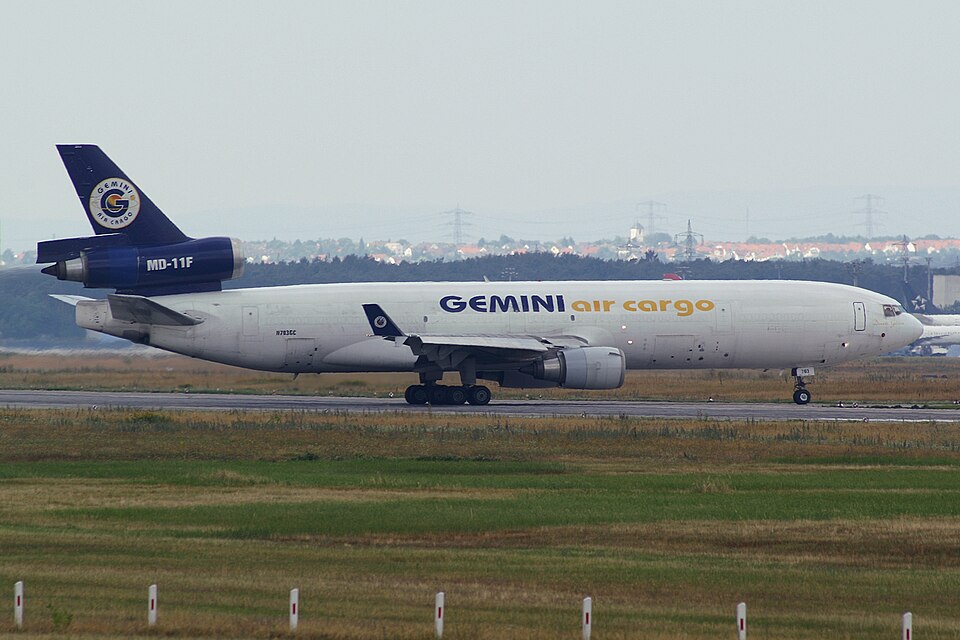
A cargo airplane overran the end of runway 4R during a night approach and landing and came to rest in an Engineered Materials Arresting System (EMAS). The flight crew reported normal cockpit indications throughout the event, and a post-incident examination of the aircraft's braking systems revealed no faults or abnormalities.
Approach and Landing
The flight crew received the current automated terminal information service weather, which indicated winds from 240 degrees at 4 knots. The captain, who was the flying pilot, stated that he used the autopilot until 500 feet above the ground before disengaging it and remaining on the glide slope. The airplane's landing weight was approximately 470,000 pounds, and it was configured for a normal approach with 35 degrees of flaps and the autobrakes set to minimum.
The captain reported that the airplane touched down between 1,500 and 1,800 feet beyond the approach end of the runway at an airspeed of about 158 knots. After touchdown, the captain applied reverse thrust and initially observed normal conditions. However, he then noted the alternating red and white runway lights appearing to approach rapidly.
Braking and Runway Excursion
With approximately 3,000 feet of runway remaining at a speed of 110 knots, the captain began to apply manual braking. The first officer reported feeling the brakes engage and the airplane's nose pitching down. The airplane departed the end of the runway and entered the EMAS. The nose gear came to rest approximately 238 feet beyond the runway end, with 115 feet of that distance within the EMAS.
Radar and Performance Study
A recorded radar and performance study indicated that the airplane crossed the runway threshold at an altitude of about 60 to 120 feet above ground level. The main landing gear touched down approximately 2,800 to 3,000 feet from the beginning of runway 4R, and the nose gear touched down at about 4,300 feet. The automatic braking system initiated approximately three seconds after nose wheel touchdown, and the pilot initiated manual braking with about 1,400 feet of runway remaining.
Operator Performance Data
According to the operator's performance data for the airplane, the maximum landing weight allowed to utilize runway 4R in the incident landing configuration was 491,500 pounds under zero wind conditions and 452,800 pounds with a 5-knot tailwind. The actual landing weight of about 470,000 pounds exceeded the tailwind limit but was within the zero wind limit.
Post-Incident Examination
A post-incident examination of the airplane included a brake inspection and an operational check of the autobrake system. No faults or abnormalities were found.