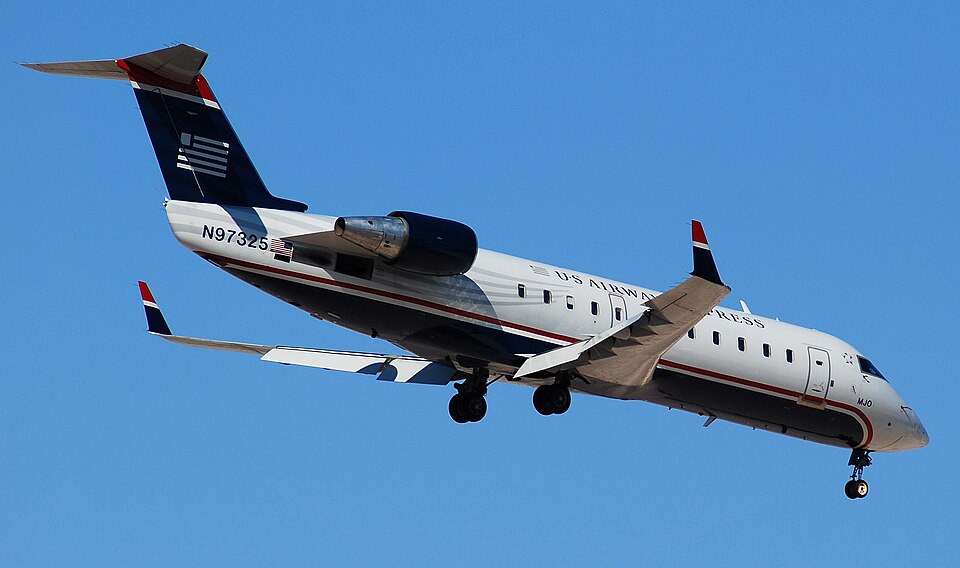
What happened
While climbing through 23,000 feet for flight level 290, a CL-60 and encountered an issue where the stab trim/mach trim caution light illuminated, indicating that both channels 1 and 2 were inoperative. This failure rendered the pitch trim system unmovable. The captain kept the airspeed below 215 knots and began a return to the departure airport. During the flight, the first officer had to maintain approximately 30 pounds of backpressure on the yolk to counteract trim forces. The aircraft landed not injured.
Maintenance crews initially suspected the failure was due to the captain's stab trim disconnect switch being stuck in the cutout position; this switch was subsequently replaced. However, a second failure occurred 32 days later in the same aircraft. During a descent from flight level 290, both channels of the stabilizer trim and the mach trim failed, accompanied by an "AP Pitch Trim" message. After approximately two minutes, the captain successfully reset both the stabilizer trim channels and the mach trim, and the aircraft landed uneventfully.
The investigation
Investigators analyzed flight data recorder (FDR) data, which showed that during the first occurrence, the stabilizer trim discrete changed from 'on' to 'off' 17 minutes into the flight. In the second occurrence, the discrete changed from 'on' to 'off' for about two minutes starting 96 minutes into the flight.
Maintenance crews replaced the Horizontal Stabilizer Trim Control Unit (HSTCU) following the second event. Testing of both the stab trim disconnect switch and the HSTCU showed they were functioning within manufacturer specifications. However, a physical examination revealed that a shoulder guide from a cam-type fastener on the HSTCU access panel door was missing and had been found loose inside the unit's circuitry area. While engineers noted that the circuit boards were protected by a heavy coating of varnish, it was noted that each trim channel resides on a separate circuit board, making a simultaneous failure caused by a single piece of debris unlikely.
Findings
A search of the FAA Service Difficulty Report database for CL-600 stabilizer control system anomalies between 1995 and July 2003 identified 67 instances of dual channel stabilizer trim failures. Of these, 27 percent were attributed to cockpit trim disconnect switch issues, 52 percent were linked to HSTCU, HSTA, or MCU issues, and 21 percent remained unresolved or could not be duplicated on the ground.