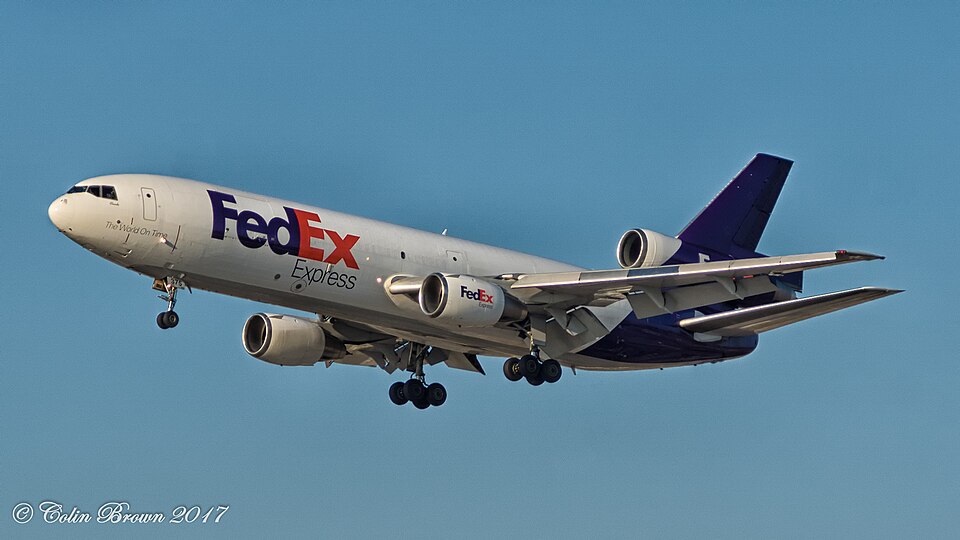
On October 12, 2003, a Mcdonnell Douglas DC-10-10 (registration N375FE) was involved in an aviation accident near Denver, CO. Investigators recorded the probable cause as: the manufacturer's improper installation of the inboard slat drive mechanism's lower left hand anti-torque strut, which resulted in the axial migration of the rod-end bearing, the binding of the anti-torque strut, and the subsequent activation of the slat… This summary draws on records from the U.S. National Transportation Safety Board (NTSB) historical archive.
A rejected take-off at Denver International Airport was initiated after a take-off warning horn sounded due to a slat configuration conflict. The aircraft stopped with damage to landing gear tires and brakes, and all seven occupants evacuated safely.
Incident Overview and Initial Response During the take-off roll, the captain initiated a rejected take-off shortly after the first officer called out the take-off decision speed of 158 knots. The decision followed the activation of the take-off warning horn. The captain chose not to apply maximum braking, aiming to reduce potential damage and heat-related risks. Denver Tower contacted the crew during the rejected take-off, reporting smoke near the left main landing gear, followed by a report of fire from the same area. Tower alerted aircraft rescue and firefighting equipment to the scene. The aircraft stopped on the runway centerline with approximately 1,800 feet of runway remaining. All seven persons aboard evacuated using the L1 escape slide after the crew completed the emergency quick evacuation checklist. ## Damage and Maintenance Findings Initial inspection revealed damage to both nose landing gear tires, two main landing gear brake lines, all eight main landing gear brake assemblies, and all eight main landing gear tires. Each damaged item required replacement before the aircraft could be towed off the runway. The maintenance manager stated that the nose and main landing gear assemblies overheated during the rejected take-off. Each tire deflated after the aircraft came to rest, with no indication that the tires had skidded. ## Technical Examination During examination of the aircraft, the take-off warning horn was determined to be the result of a take-off configuration conflict between the inboard and outboard slats. Inspection of the inboard slat drive mechanism's lower left-hand anti-torque strut revealed that a rod-end bearing had migrated out of the rod-end and two washers were missing. This allowed the anti-torque strut to ride on the bolt that attaches the rod-end to the slat drive mechanism.
A SkyWalk Join't 3 paraglider crashed into the ground near Las Vizcachas, Chile, on September 1, 2024. The pilot and passenger sustained serious spinal…
PARAPENTE (ULTRALIVIANO NO MOTORIZADO)·2024-09-01DGAC Chile
A Cessna 172N struck electrical cables while on final approach to land at Aucó Aerodrome in Chile. The pilot was uninjured, but the aircraft sustained damage…
A Bombardier DHC-8-402 suffered a tail strike during landing at Puerto Williams on September 9, 2024. All 76 occupants were unharmed, but the aircraft…
A MYD JS-MD 3 glider veered off the runway and struck a wall at Vitacura Aerodrome on January 6, 2025. The pilot was uninjured, but the aircraft sustained…
A recreational paraglider flight in Puchuncaví, Chile, ended with the pilot sustaining serious injuries after a rapid descent and impact with a hillside on…
PARAPENTE (ULTRALIVIANO NO MOTORIZADO)·2025-03-29DGAC Chile
A Tecnam P2006T landed on its belly at an aerodrome in Poland after the crew failed to confirm landing gear deployment. The incident resulted in no injuries…