Incident Overview
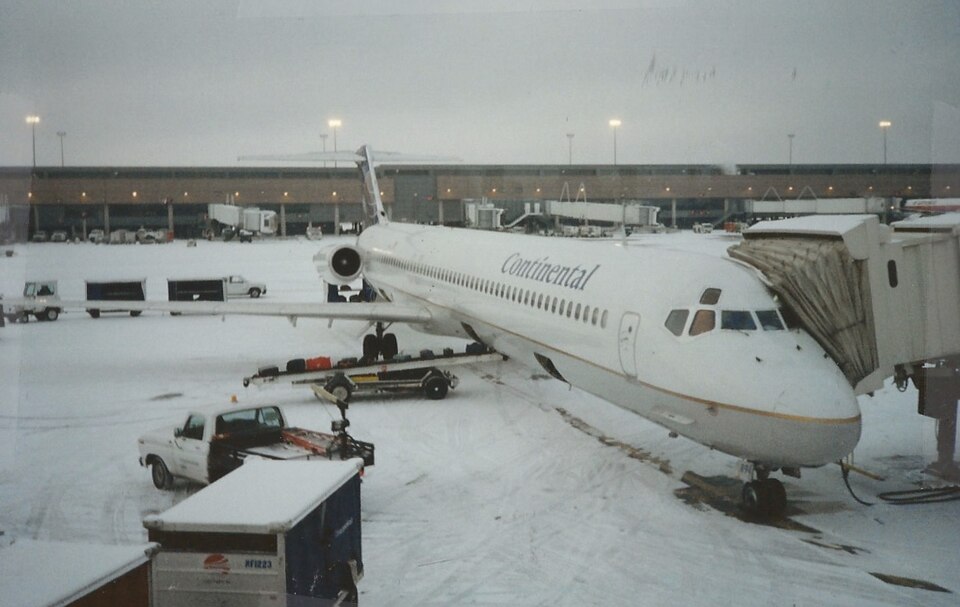
A McDonnell Douglas MD-82 experienced a partial loss of engine power during the takeoff roll, prompting the crew to abort the departure. Upon examination, the left engine was found to have sustained foreign object impact damage. The aircraft had been parked outside overnight in an area covered with heavy wet snow and slush, which was also present on the taxiway at the time of the incident flight.
Preflight Actions
The captain reported that she did not request chemical de-icing during the preflight inspection because the outside air temperature was above freezing at departure. She noted no signs of ice on the wings during the early morning preflight. A maintenance technician visually inspected both engine inlets for any accumulation of debris prior to departure. The incident aircraft was not equipped with an inboard, over-wing heater blanket system; however, it did have a series of non-skid strips and tuft triangular decal/symbols designed to aid crews in performing a tactile inspection of the upper inboard wing surface. The operator's safety officer reported that the crew did not perform a tactile inspection of the upper wing surfaces before the incident departure.
Weather Conditions
A weather observation at the time of the incident recorded the following: sky conditions and ceiling at 200 feet, few clouds at 600 feet, overcast; visibility 10 statute miles; wind from 290 degrees at 8 knots; temperature 37 degrees Fahrenheit; dew point 37 degrees Fahrenheit.
Additional Information
The MD-80 flight crew operating manual states: "Clear ice can also form on wing upper surface when cold-soaked fuel is in the main wing fuel tanks and the airplane is exposed to conditions of high humidity, rain, drizzle, or fog at ambient temperatures well above freezing."
Conclusion
The incident involved a partial loss of engine power due to foreign object damage to the left engine, occurring after the aircraft was parked in snowy conditions. No further analysis or causal factors have been provided.