Incident Overview
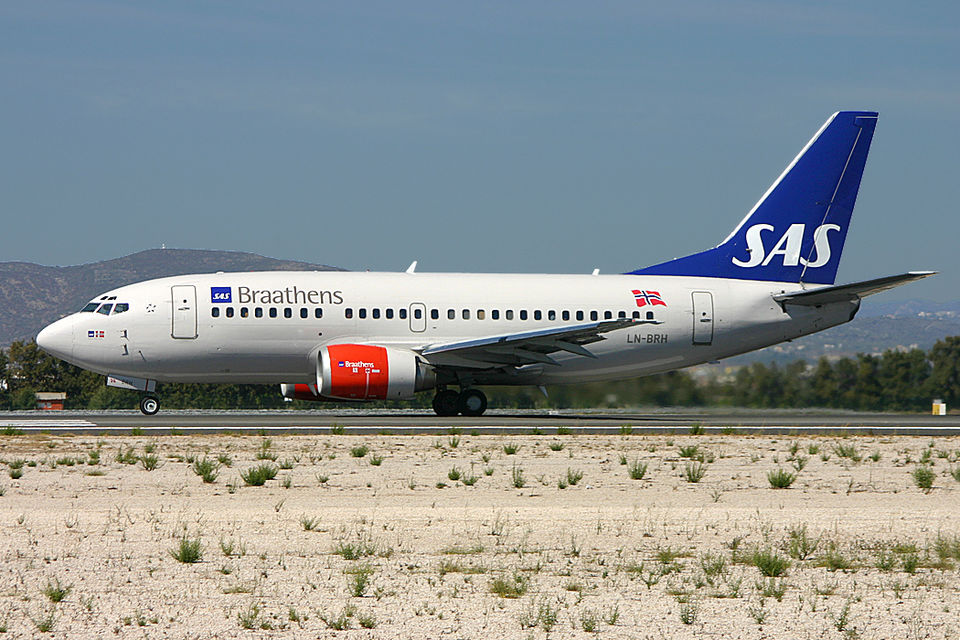
On Sunday, 6 June 2004 at 1659 hours local time, a runway incursion occurred at Bergen Airport Flesland (ENBR) involving Lufthansa CityLine flight DLH 5219 (aircraft type Avro RJ85, registration unknown) and Braathens flight BRA 349 (Boeing 737-505, registration LN-BRH). The incident took place in daylight with visual meteorological conditions (VMC). No injuries or aircraft damage were reported.
Sequence of Events
At 1649 hours, DLH 5219 received route clearance from Flesland Ground Movement Control (GND) to Hamburg. After start-up and push-back, taxi clearance was issued at 1655 hours with instructions: "TO HOLDING POSITION 17 VIA DELTA AND YANKEE." The flight crew read back the instructions correctly.
Meanwhile, BRA 349 was executing a visual approach for runway 17 and received landing clearance from Flesland Tower Control (TWR) on base-leg at 1659 hours. At the same time, DLH 5219 approached the holding position on taxiway A and transferred from GND to TWR frequency (119.100 MHz) but did not check in on TWR frequency.
The GND controller observed DLH 5219 crossing the holding position line, exceeding its clearance limit. She alerted the TWR controller and attempted to call DLH 5219 on GND frequency (121.900 MHz) without success.
TWR revoked BRA 349's landing clearance and instructed the pilot to extend the approach. BRA 349 requested and was approved to perform a left-hand 360-degree turn on final. TWR then contacted DLH 5219, informing the crew they had passed the holding position markings. The pilot of DLH 5219 confirmed and apologized. With DLH 5219 stationary and blocking the active runway, TWR altered the traffic sequence by issuing take-off clearance to DLH 5219 at 1700 hours while BRA 349 was in a delay turn on final. BRA 349 subsequently landed at 1703 hours.
Pilot Report
The commander of DLH 5219 stated that the main reason for overshooting the holding position was cockpit workload and lack of situational awareness. The pilots received a "cabin clear" from a flight attendant, read checklists, and were confused by the taxiway intersection of Y and A. The parallel taxiway Y continues beyond A to the military apron, and the runway strip extends north of the intersection with taxiway A. The flight crew momentarily thought they needed to follow taxiway Y further to reach the beginning of runway 17. The co-pilot rechecked the aerodrome chart. When they turned onto taxiway A, the pilots questioned whether a line-up clearance had been received and halted the aircraft. At that moment, TWR called to note the passing of the holding position markings.
Board Comments
The Accident Investigation Board Norway (AIB-N) noted that the number of runway incursions reported through Avinor's Safety Management System had been increasing. This report focused on aerodrome layout, taxiway markings and signs, as well as cockpit workload issues. The board observed that the holding position on taxiway A has an offset between painted markings and signs on the edge: the left sign is located some distance toward the runway, while the right sign is before the painted markings. Runway guard lights ("wig-wags") were serviceable and operating. Flushed red lights at the holding position are not fully installed to form a stop bar. Taxiway A intersects the runway at about 60 degrees after a curve from taxiway Y, limiting the pilot's view of final approach. In contrast, the holding position for runway 35 on taxiway E has markings and signs aligned, offering better visibility. The aerodrome chart does not show the full detail of the taxiway intersection of A and Y, as the taxiway to the military apron is masked. AIB-N recommended a review of the holding position and signs on taxiway A and a revision of aerodrome charts to correct this lack of information.
Safety Recommendations
AIB-N issued two safety recommendations: (1) that Avinor AS reconsider the holding position location of painted markings and signs on taxiway A and the need for additional signs on taxiway Y (SL Recommendation No. 51/2004); and (2) that the Aeronautical Information Service of Norway revise aerodrome and landing charts of aerodromes with military installations so that taxiways and intersections available to civil aircraft are depicted clearly (SL Recommendation No. 52/2004).