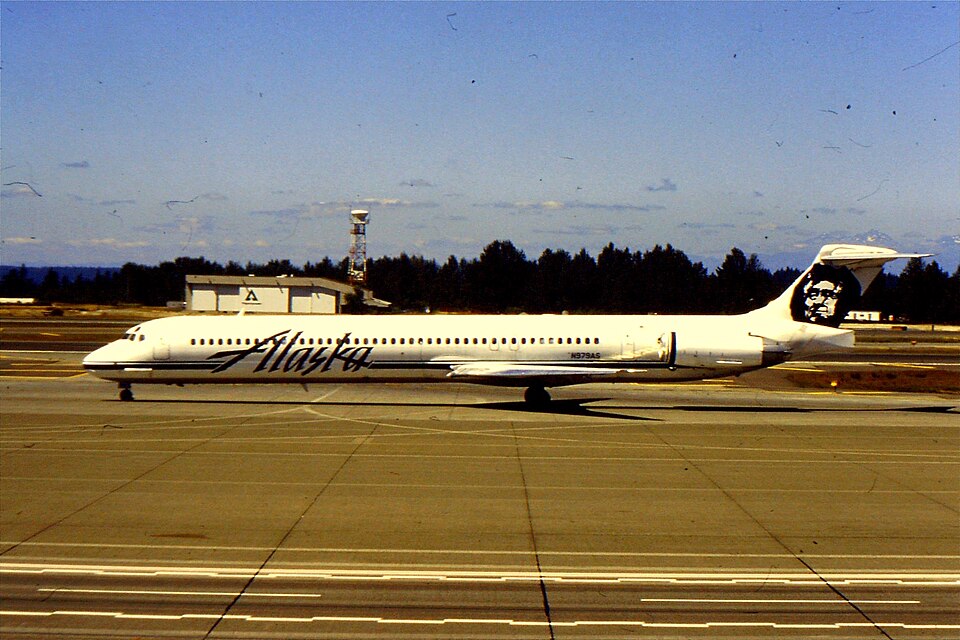
Background
The captain reported that the airplane arrived late into Seattle from its previous flight. The new flight crew was waiting at the gate. After the airplane was chocked and the engines shut down, the first officer immediately performed his preflight inspection.
Ground Incident
A ground baggage handler, driving a tug towing a train of baggage carts, stated that he approached the airplane from aft to forward. He had to maneuver around another train of carts to get close to the belt loader. After loading the carts with baggage, he attempted to drive away. He said, "I was hoping to make it out, but I felt my tug going against something. I immediately set my foot on the brakes and glanced at the body [in moderate rain] of the aircraft to see if there was any damage. It was a quick glance and I did not see any damage." He did not report the incident to anyone.
In-Flight Emergency
The pilot said that the takeoff was normal. During the climb out, at approximately 26,000 feet, they heard a loud bang, and the cabin depressurized. He stated that they put their oxygen masks on and coordinated a descent to a lower altitude with Seattle Center. An uneventful landing was performed at Seattle-Tacoma International Airport, Seattle, Washington.
Aftermath
Post-landing examination of the fuselage revealed a 12 by 6 inch hole between the middle and forward cargo doors on the right side of the airplane. After the occurrence, the ground baggage handler confessed that he had "grazed the airplane" with a tug while attempting to depart the vicinity of the airplane.