Casualties unknown

Severe Turbulence Encounter Leads to Passenger Injuries (N223PB)

Dorado, PR, US

On March 27, 2006, a Cessna 402C (registration N223PB) was involved in an aviation accident near Dorado, PR. Investigators recorded the probable cause as: The failure of the pilot to use on-board weather radar equipment for weather avoidance and the pilot's continued operation into known adverse weather conditions, resulting in injury to passengers. This summary draws on records from the U.S. National Transportation Safety Board (NTSB) historical archive.

Sourcesthe U.S. National Transportation Safety Board (NTSB) historical archivePrimary reportUpdated 2026-06-10Data APIEditorial standards
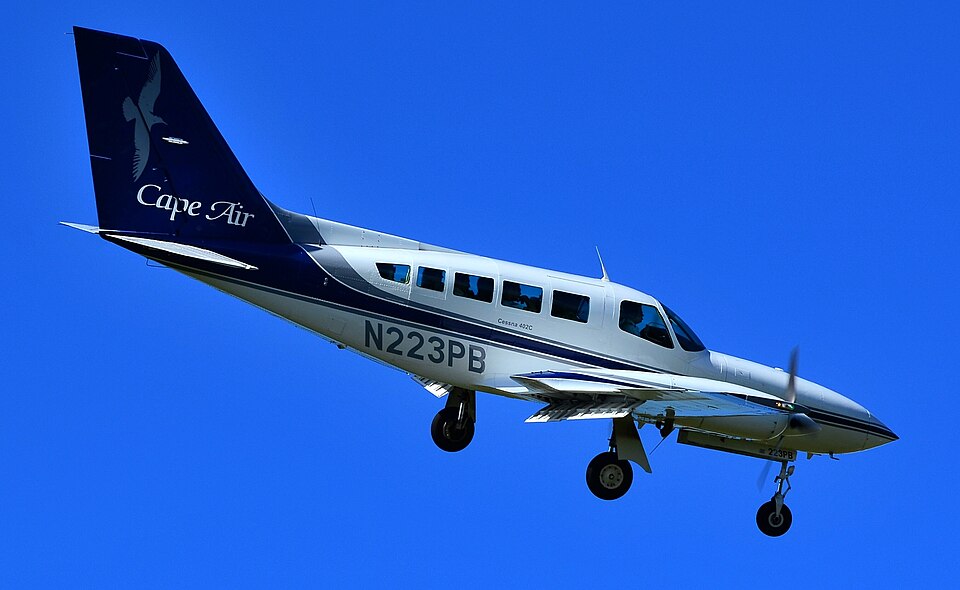
Aircraft registered N223PB
Aircraft registered N223PB. Photo: Tomás Del Coro from Las Vegas, Nevada, USA / CC BY-SA 2.0, via Wikimedia Commons

A pilot reported encountering severe turbulence lasting one second while flying at 5,000 feet in broken clouds with light rain. Several passengers hit their heads on the ceiling; one injured passenger noted the pilot's pre-flight bumpy ride warning and later observed weather radar-like images on a screen.

Incident Description

During a flight at 5,000 feet in a broken cloud layer with light rain and turbulence, the pilot reported that the aircraft encountered severe turbulence lasting approximately one second while the autopilot was engaged. As a result, several passengers struck their heads on the ceiling. The pilot subsequently avoided all clouds, requested medical assistance upon landing, and completed the landing without further incident.

Passenger Account

One injured passenger stated that the pilot had advised passengers that the flight would be "bumpy" and emphasized the need to keep seatbelts fastened, a precaution she had followed. At the time of the event, she heard sounds "like small pebbles dropping onto the plane" and observed mist on the windshield that streamed from the bottom and middle to the top. After assessing herself approximately one to two minutes later, she noticed that the pilot had activated a screen that had been blank until then. On that screen, she saw "green blobs that came on and off," which she likened to a radar screen seen on television.

Weather Conditions

Weather radar data indicated that the aircraft was in proximity to radar returns ranging from VIP Level 1 to Level 4 at the time of the occurrence. The pilot reported the presence of a broken cloud layer, light rain, and turbulence before the severe event.

Investigation report by the U.S. National Transportation Safety Board (NTSB) historical archive. Original record: https://carol.ntsb.gov/event/20060331X00374. This page is a structured re-presentation; facts and quotes are in the National Transportation Safety Board (NTSB), United States.