Incident Overview
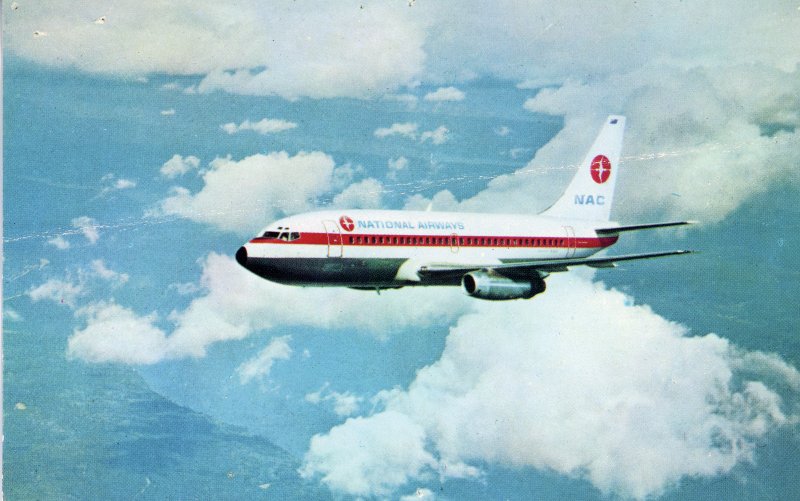
On August 19, 2009, a Boeing 737-236, registration HC-CFD, was involved in an incident at Coca - Aeropuerto Francisco de Orellana Airport (OCC) in Coca, Ecuador. After touching down on runway 15 and deploying the thrust reversers, the flight crew felt a vibration and the airplane yawed to the right. The thrust reversers were immediately stowed, and the airplane was brought back to the runway centerline. The aircraft was then taxied to the gate without any cockpit alerts or abnormal engine indications reported.
Aircraft and Engine Details
The aircraft was a Boeing 737-236 equipped with two Pratt & Whitney JT8D-17A turbofan engines. The incident involved the No. 1 (left) engine, from which the thrust reverser separated after deployment. The missing thrust reverser was later recovered near the runway.
Examination Findings
An examination of the recovered thrust reverser parts was conducted at the NTSB metallurgy laboratory. The analysis revealed evidence of fatigue fractures circumferential around the tailpipe duct. No other damage or anomalies were reported on the aircraft or engine.
This investigation is under the jurisdiction of the government of Ecuador. Further information may be obtained from the Dirección General de Aviación Civil in Quito, Ecuador.