History of Flight
On August 1, 2010, at 1500 Alaska daylight time, a Fairchild FA-C-123K Provider, registration N709RR, collided with terrain while maneuvering over Denali National Park, Mount McKinley, Alaska. The aircraft sustained substantial damage. All three occupants—a commercial pilot, a private pilot co-pilot, and a passenger—were killed. The aircraft was registered to and operated by All West Freight, Incorporated, Delta Junction, Alaska. Visual meteorological conditions prevailed for the flight, which originated at Wolf Lake Airport (4AK6), Palmer, Alaska, and was destined for Unalakleet Airport (PAUN), Unalakleet, Alaska. No flight plan was filed for the business flight conducted under 14 Code of Federal Regulations Part 91.
The purpose of the flight was to transport an approximately 12,000-pound diesel generator to Unalakleet and return to Palmer. A review of air traffic control (ATC) services revealed that the pilot was not in contact with ATC, and no radar service was provided.
According to a family member, the airplane departed Palmer around 1400, with a proposed route north along the Parks Highway and then west toward Unalakleet past Denali National Park.
A witness hunting about 10 miles south of Cantwell, Alaska, saw the airplane flying about 300 to 500 feet above the Parks Highway near mile-marker 195 at 1452. The airplane was straight and level, headed north, with landing gear and flaps retracted. The witness, a pilot, noted the engines were "really working" and felt the air vibrate. He observed a ceiling of approximately 3,500 to 4,000 feet overcast with partially obscured mountains. He took two photos of the airplane and one of the mountain obscuration.
Another witness, a private pilot eating lunch at a restaurant near Denali National Park's entrance, saw the airplane flying over a valley in "slow flight" with an approximate 30-degree nose-down descent. The airplane then suddenly pitched straight up near vertical, stalled, rolled left, and nosedived toward the ground. The witness did not see impact but observed two large mushroom clouds. She took two photographs: one showing straight and level flight, another showing the airplane inverted in near-vertical descent just above the tree line. Numerous witnesses observed the airplane flying low and slow before entering a steep left bank and nose-diving; engine sounds were loud with a pitch increase before impact.
Aircraft Information
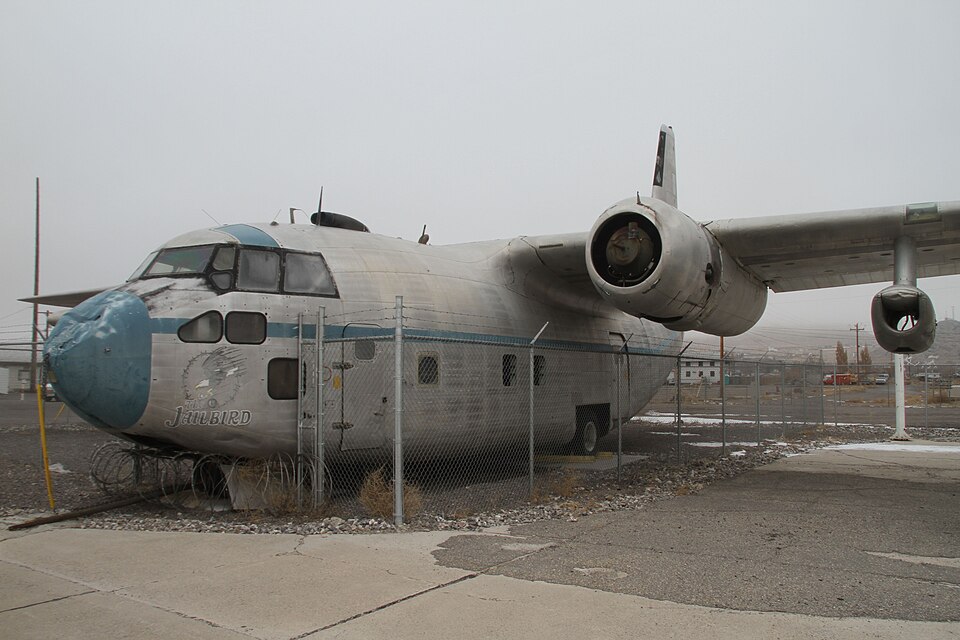
The C-123K Provider is an American military transport aircraft designed by Chase Aircraft and built by Fairchild Aircraft for the United States Air Force. It features a high wing, conventional tail, and tricycle landing gear, designed for short, unprepared runways. The aft fuselage includes a large cargo door and ramp. The aircraft is 76.25 feet long, has a 110-foot wingspan, a cargo capacity of 24,000 pounds, and a maximum takeoff weight of 60,000 pounds.
The accident aircraft was manufactured in 1954, powered by two Pratt & Whitney R-2800-99W radial engines (2,300 hp each) and two General Electric J85-GE-17 turbojets (2,850 lbs each). According to FAA records, it was approved for civilian "Restricted Category" operations on August 21, 1984. It received a Restricted Category Special Airworthiness Certificate on May 20, 2009, allowing only cargo carriage with specific operating limitations.
The actual gross weight at the time of the accident could not be determined, but an estimate based on limited information was about 59,000 pounds.
Wreckage and Impact
The aircraft impacted sloping, wooded terrain adjacent to the main road into Denali National Park, between the visitor's center and park headquarters. It collided with numerous standing Spruce trees, with cut branches exhibiting flat angular fractures and black paint transfer marks. The wreckage came to rest upright on a 060-degree heading at an elevation of approximately 2,158 feet msl, within a 250-foot by 300-foot area. An extensive post-impact fire consumed most of the cockpit, fuselage, inboard wing sections, flaps, and damaged the tail and outboard wing sections. The fire also started a small forest fire.
All major flight control surfaces were located at the site, including both radial engines and jet-assist engines. Flight control continuity was established to the cockpit. The left and right wings with ailerons sustained impact and fire damage. The vertical stabilizer, rudder, and rudder trim were damaged and found on top of the cockpit. The right horizontal stabilizer showed fire and impact damage; a section of the right elevator remained attached with burned fabric. The left horizontal stabilizer was extensively fire-damaged.
The Number 1 engine (left jet) was separated from the wing, with no evidence of rotation at impact. The Number 2 engine (left radial) exhibited significant impact damage; one propeller blade remained attached with a smooth forward bend, and two blades were fractured at the hub with leading edge gouging. The Number 3 engine (right radial) also showed significant impact damage; one blade was deformed, a second fractured into multiple pieces, and a third fractured into three pieces. The Number 4 engine (right jet) was separated with no rotation evidence.
The generator came to rest upright in the center of the wreckage, consistent with the cargo bay location. The nose gear was found forward and partially under the generator. The cargo ramp and main landing gear were aft of the generator. Twenty-three tie-down rings were recovered, with locking hooks attached to three. Ratchet assemblies and hooks were recovered without nylon strapping. Examination revealed no evidence that the generator had shifted during flight. The aircraft also carried fuel for the return trip in 50-gallon steel drums; remains of seven barrels were found. Inspection disclosed no evidence of preaccident mechanical problems.
Personnel Information
The pilot, age 61, held a commercial pilot certificate with ratings for airplane single-engine land and sea, multi-engine land, rotorcraft-helicopter, and instrument airplane. He held a type rating for the FA-C-123 and was restricted to VFR flights. His last FAA second-class medical was issued on May 27, 2010, with a limitation requiring glasses for near vision. He reported a total of 20,000 flight hours; logbooks were unavailable.
The co-pilot, age 52, held a private pilot certificate for airplane single and multi-engine land, rotorcraft-helicopter, and instrument airplane. His last FAA third-class medical was issued on June 28, 1989, with a limitation requiring glasses for near vision. He reported 70 flight hours; logbooks were unavailable. The FAA required a co-pilot, but the co-pilot did not need a type rating.
Medical and Pathological Information
Autopsies attributed the cause of death for both pilots to blunt force injuries. Toxicological testing for both pilots was negative for drugs and alcohol.