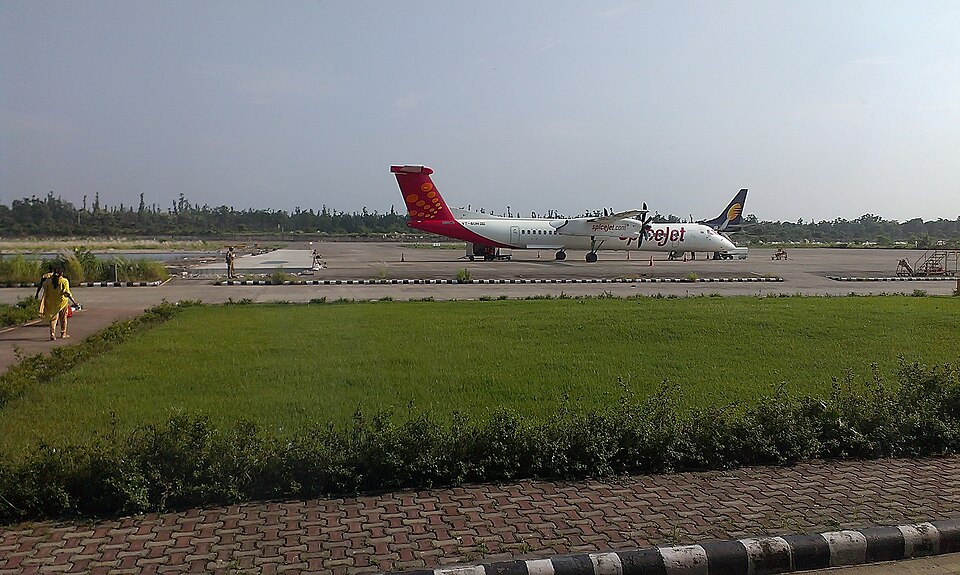
History of the Flight
On 28 July 2013, Spicejet flight SG-3291, operated by a Dash 8 Q-400 aircraft registered VT-SUH, was scheduled from Chennai (MAA) to Tuticorin (TCR). The aircraft carried 4 crew and 50 passengers. The pilot-in-command (PIC) and first officer had rested 16.5 and 18 hours, respectively, prior to duty. Both passed preflight medical and breathalyzer tests. Takeoff from Chennai occurred at 02:06 UTC. The flight was uneventful until the approach.
The aircraft contacted Tuticorin ATC at 02:40 UTC, 124 NM inbound. After receiving the latest weather report, the crew descended as instructed. At 02:56 UTC, the aircraft reported 25 miles inbound and was cleared to 3300 ft. At 02:59 UTC, the crew reported the airfield in sight and requested descent to traffic pattern altitude. The tower provided wind information (300°/10 knots) and instructed to report right base for Runway 28. At 03:01 UTC, the aircraft reported right base and was told to report finals. At 03:03 UTC, the aircraft was sighted and cleared to land on Runway 28 with wind 300°/10 knots.
At 03:07 UTC, the aircraft touched down. The cockpit annunciations “Touched Runway” and Master Caution illuminated. After landing, the aircraft vacated the runway via Taxiway A. Passengers disembarked normally. The PIC conducted a post-flight inspection, discovered tail strike marks, and notified the airline's flight safety department and technician. The technician informed ATC at 03:30 UTC. A runway inspection revealed red scratch marks and metal scrapes, with no damage to the runway surface. A small portion of the touched runway switch fairing was damaged. No abnormalities were reported by passengers or cabin crew.
Damage to Aircraft
The aft lower fuselage sustained significant damage. Skin deformation and abrasion were found between X 714–X 819 and stringers 29P–29S on lower fuselage panels P/N 85337135 and P/N 85337155. The tail strike frangible switch and doublers were damaged.
Personnel Information
The PIC held a Foreign Aircrew Temporary Authorization (FATA) and an Airline Transport Pilot License (ATPL). He had 11,833 hours total flying experience, with 2,225 hours on type. The first officer held a Commercial Pilot License (CPL) with 1,461 hours total, including 413 hours on the Dash 8 Q-400. Both had recent simulator training and were familiar with Tuticorin airport (20 and 21 sectors in the last 12 months, respectively). No flight duty time limitation violations were observed.
Probable Cause
The investigation determined the probable cause of the incident: improper handling of flight and thrust controls by the first officer during an unauthorized supervised landing on a Category C airport. Early reduction of power and a high pitch attitude just before touchdown resulted in lower aircraft speed and a tail strike.