History of Flight
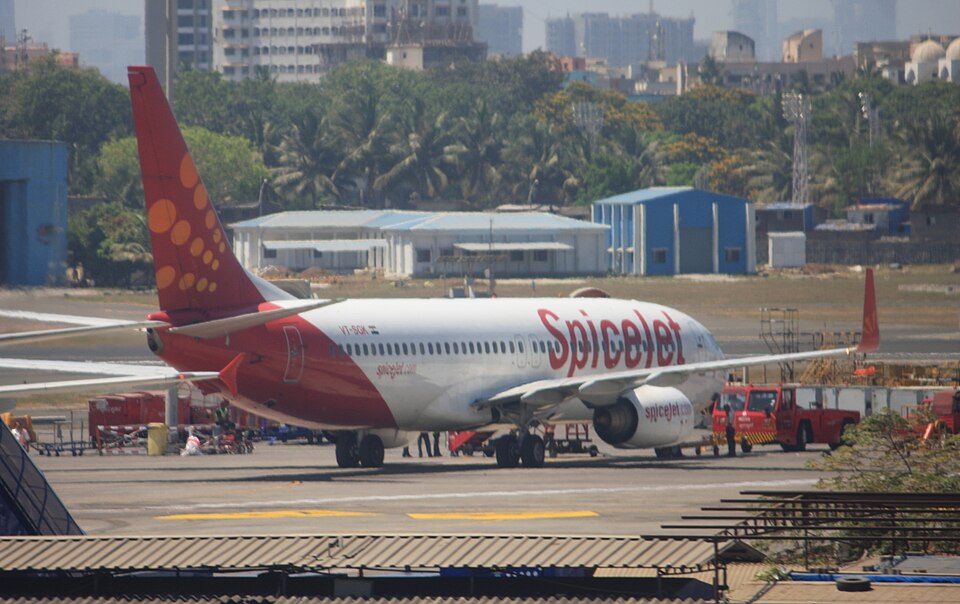
On 6 November 2014, SpiceJet flight SG-622, a scheduled service from Surat to Delhi, was operated using a Boeing 737-800 aircraft registered VT-SGK. The pilot-in-command held an ATPL, and the first officer held a CPL. The aircraft carried 151 passengers and 6 crew members.
The aircraft had arrived at Surat earlier as flight SG-623 from Delhi at 1246 UTC. After landing, it backtracked on runway 22 and vacated via taxiway A to park at bay 1. For the departure, the pilot requested runway 04. At 1329 UTC, taxi clearance was given via taxiway A. Visibility was 6 km with calm winds and no significant cloud. The temperature was 29°C, dew point 15°C, and QNH 1011 hPa.
After entering runway 04/22, the aircraft backtracked and lined up on runway 04. At 1335 UTC, the aircraft was cleared for take-off. During the take-off roll, at approximately 350 meters from the start of the runway and at a speed of 78 knots, the left engine struck a buffalo. The pilot-in-command reported seeing something moving in his peripheral vision and hearing a bang, then initiated a rejected take-off. The aircraft was brought back to the apron. The crew informed ATC of a dog hit; later inspection revealed the animal was a buffalo.
Damage
The damage was confined to the left engine and adjacent exterior. The left engine nose inlet cowl was damaged near the 7 o'clock position, fan cowl had dents around 9 o'clock, and the inboard thrust reverser sleeve sustained a large puncture. Nine fan blades had nicks, bends, chipping, and FOD damage. No other damage was reported.
Personnel Information
The pilot-in-command, aged 25, held an ATPL and had 2903:34 hours total flying experience, with 2601:34 hours on type. The first officer, aged 26, held a CPL with 2304:58 hours total experience, including 1969:37 hours on type. Both held valid medical certificates.
Aircraft Information
The Boeing 737-800 (MSN 33019) was manufactured in 2004 and registered in India under ownership of CIT Aerospace Ltd. It was powered by two CFM56-7B/26 engines. At the time of the accident, the aircraft had accumulated 36,171:14 hours and 17,096 landings. The certificate of airworthiness was valid.
Meteorological Conditions
The accident occurred after 1335 UTC, with the 1300 UTC METAR valid. Conditions included calm winds, visibility 6000 m, no significant clouds, temperature 29°C, dew point 15°C, and QNH 1011 hPa. Sunset had occurred before the accident.
Probable Cause
The investigation concluded that the aircraft accident was caused due to the deficiency in Aerodrome boundary security. This resulted in entry of buffalo onto the runway and its subsequent ingestion into left engine of the aircraft during take-off roll.