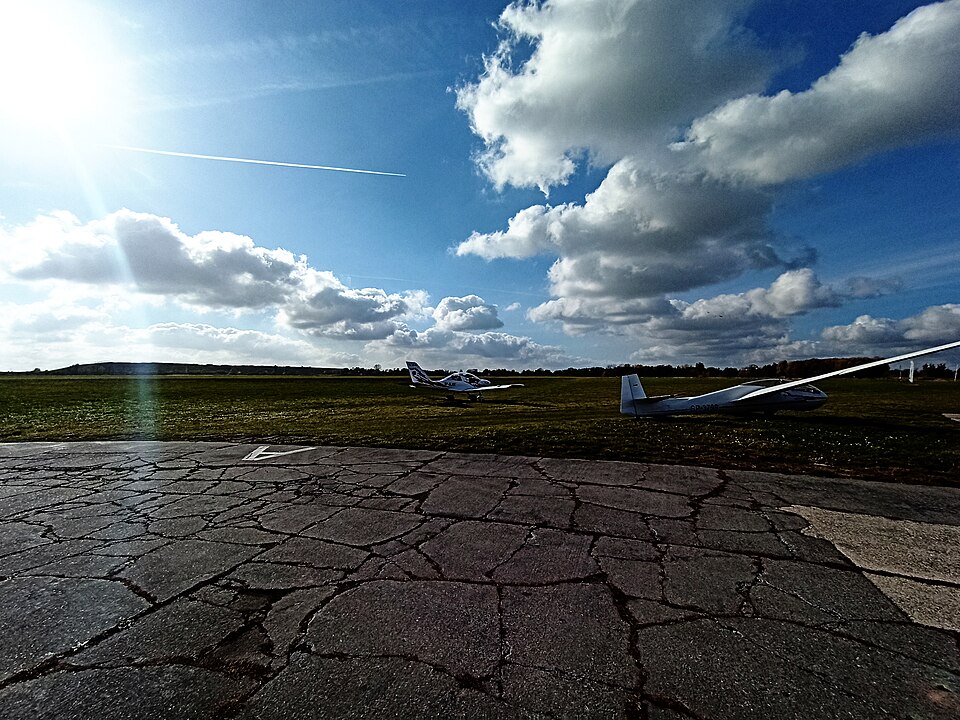
Accident Overview
On 27 July 2015, at 17:04 local time, a glider accident occurred at the Rybnik Gotartowice aerodrome (EPRG). The aircraft involved was a SZD-9 bis 1E Bocian, registration SP-3799, owned and operated by Ośrodek Szkolenia Lotniczego BB-Aero. The flight was a training mission for exercise SPL/1, task 4, focused on emergency procedures. The crew consisted of a 69-year-old glider instructor with 867 hours total flight time (324 hours as instructor) and a 39-year-old student pilot with 4 hours 55 minutes total flight time.
Sequence of Events
Before the flight, the instructor coordinated with the winch operator to simulate a cable break at approximately 20 meters above ground. After takeoff, the winch operator cut power at the agreed altitude. The student did not react. The instructor waited briefly, then gently lowered the nose to transition to level flight and released the tow cable. The glider briefly flew level, gradually losing speed. The instructor said to the student, "You missed it." In response, the student fully deployed the airbrakes. The glider, in a horizontal attitude, began to sink and struck the ground with its right wing first, followed by the main landing gear. During the short rollout, the glider veered approximately 120 degrees to the right and came to a stop.
Damage and Injuries
The glider sustained damage to the main landing gear, the front lower fuselage, the right wingtip, the right airbrake plate, and both seats. The student pilot suffered a fracture of the seventh vertebra, classified as serious injuries. The instructor was uninjured.
Findings
The investigation determined that the accident was caused by: the instructor's failure to secure adequate airspeed after the simulated cable break, specifically the lack of transition to a gliding flight attitude; and the student's deployment of full airbrakes, which caused a loss of lift and a descent. A contributing factor was the instructor's actions under time pressure due to the critically low altitude. Weather conditions were not a contributing factor. No safety recommendations were issued.